


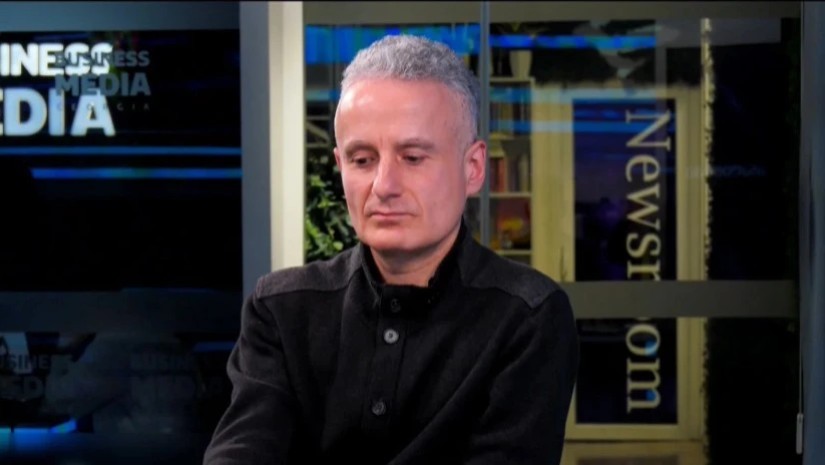

Visa liberalization between Georgia and the European Union has had a direct and significant impact on the country’s economy, according to Mikheil Kukava, CEO of Stemscale. His remarks came in response to GD Prime Minister Irakli Kobakhidze’s recent statement that “visa liberalization has no connection with the economy.”
Kukava sharply criticized the claim, calling it “so baseless that it is simply embarrassing to even discuss.”
According to Kukava, the introduction of visa-free travel with the EU has facilitated labor mobility and created opportunities for temporary employment abroad, particularly within EU member states. This, he argues, has had a measurable effect on the country’s remittance flows, one of the key drivers of household consumption in Georgia.
“Visa liberalization is very closely related to the economy. As of June 2025, 45% of remittances, more than $140 million, came from EU countries, and that figure is growing,” Kukava said in an interview with bm.ge. “The volume of remittances from the EU has increased by 17% compared to the previous year. Before visa liberalization, those figures were significantly lower.”
He noted that a large portion of the remittances stems from Georgian citizens who travel to EU countries for short-term employment, typically for three months, before returning home. These workers contribute substantially to the country’s income and consumption levels.
“Imagine subtracting $140 million from the total $315 million in remittances we currently receive. The impact on household consumption, and by extension, the broader economy, would be undeniable,” Kukava added.
Kukava also pointed to another indirect, yet equally important, economic benefit of visa liberalization: investor confidence. Since Georgia gained access to visa-free travel and a free trade regime with the EU, the country has seen an influx of foreign investors drawn by its closer alignment with European standards and access to EU markets.
While visa liberalization and free trade are not legally linked, Kukava argues they are symbolically and politically interconnected in the eyes of international investors.
“Stopping visa liberalization would send a negative signal, it would indicate that Georgia has deteriorating relations with its main trading partner and the primary guarantor of democracy and freedom: the European Union,” he warned. “That would force investors to question their future in Georgia.”
Kukava concluded that to dismiss the economic relevance of visa liberalization is to ignore clear evidence and economic logic.
“Claiming that visa liberalization doesn’t affect the economy is not just wrong, it’s irresponsible,” he said. “It undermines the benefits that thousands of Georgians and the broader economy have experienced since the agreement was introduced.”