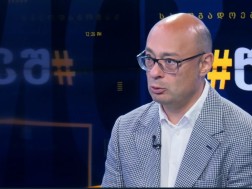


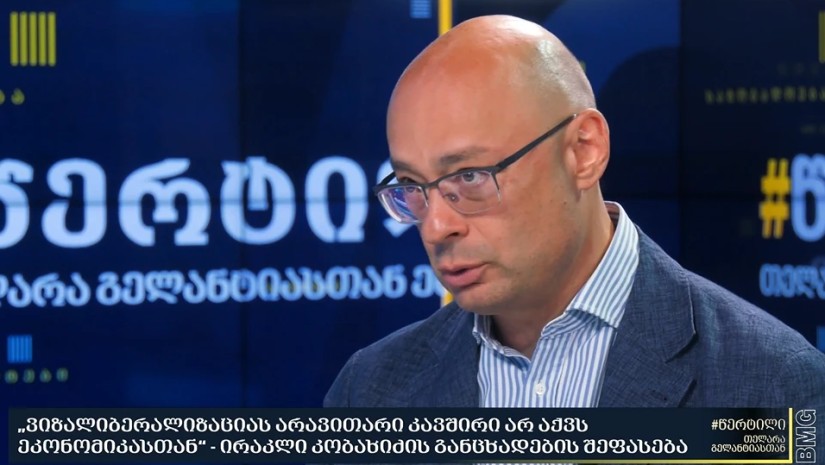

Former Minister of Economy and Sustainable Development Giorgi Kobulia has sharply criticized Prime Minister Irakli Kobakhidze’s recent claim that “visa liberalization has nothing to do with the economy,” calling the statement misleading and harmful to public understanding of the issue.
Speaking on BMGTV’s program “Pestili,” Kobulia, who served as economy minister in the Georgian Dream government between 2018 and 2019, said the suspension of visa-free travel with the European Union would have serious economic repercussions far beyond the inconvenience of applying for a visa.
“The idea that visa liberalization is unrelated to the economy is simply incorrect. This is not a trivial issue, it has deep economic, reputational, and long-term developmental implications,” Kobulia said.
He outlined three key ways in which visa liberalization is directly connected to Georgia’s economic wellbeing:
1. Remittances and Foreign Currency Inflows
Kobulia noted that remittances from Georgian citizens working temporarily in the EU are a major source of foreign currency for the Georgian economy. In 2024 alone, total remittances exceeded $1.5 billion, with a significant share coming from EU countries.
“Naturally, if visa-free travel is suspended, fewer people will be able to go to Europe to work,” he explained. “Obtaining a visa costs money that many cannot afford, and it creates additional barriers to employment abroad. As a result, foreign currency inflows from remittances would decline, impacting household consumption and national economic stability.”
2. Investor Confidence and Access to European Financing
Kobulia warned that halting visa liberalization would further damage Georgia’s investment environment and international reputation,
areas already under strain.
“It will become even harder to attract foreign investment and secure financing from European institutions,” he said. “Investors see visa liberalization as a signal of political alignment and institutional maturity. Its suspension raises red flags about Georgia’s direction.”
He emphasized that both the government and private businesses would face greater challenges securing loans and financial support from European partners under such circumstances.
3. Slower Cultural and Economic Integration with Europe
The former minister also stressed the long-term developmental risks of limiting Georgian citizens’ ability to travel freely to the EU. While this does not affect business directly in the short term, he argued, it plays a critical role in shaping Georgia’s future.
“Visa liberalization enables people, especially young people, to travel, gain exposure to European culture, and bring back new ideas. This mobility accelerates Georgia’s cultural, educational, and business integration with the EU,” Kobulia noted. “Without it, our progress toward European standards slows, and that affects long-term growth.”
Kobulia did concede one point made by GD Prime Minister Kobakhidze: the idea that ending visa-free travel could increase the domestic labor force, as fewer people would be able to leave the country for work.
However, he argued that the overall economic benefit of remittances and international exposure far outweighs the limited gains of a slightly larger labor pool.
“Yes, some people may remain in Georgia and enter the local workforce, but I believe the value of foreign currency transfers and international experience contributes more to the economy than simply having more people available to work locally,” he said.