

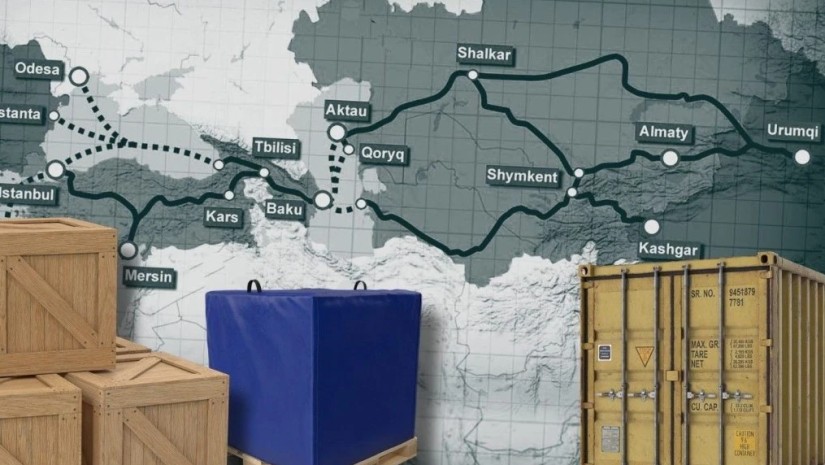

The development of the Middle Corridor could increase Georgia’s economy by an additional 3.61% and employment by 0.79% in the long term, according to a new World Bank report. The report assesses the economic potential of the Trans-Caspian Transport Corridor and its impact on the countries along the route.
According to the World Bank, the corridor could increase the economies of participating countries by an average of 3.3% and employment by 2.9%, provided governments combine infrastructure investment with policy, institutional and operational reforms. The expected gains would come from reducing transport barriers, improving supply-chain reliability and expanding access to markets.
The corridor connects nine countries - Azerbaijan, Georgia, Armenia, Türkiye, Kazakhstan, the Kyrgyz Republic, Tajikistan, Turkmenistan and Uzbekistan. The World Bank says improved transport links and lower trade and logistics costs could generate economic benefits across the region, with the scale varying among individual countries.
More than $25 billion in investment will be needed through 2040, particularly in rail networks, maritime ports and roads, according to the report. The World Bank says infrastructure upgrades, combined with more efficient trade and transport systems, could strengthen the corridor’s role as a driver of long-term economic growth and employment.