
By George Katcharava
The jagged cliffs of the Black Sea’s eastern rim have, for decades, functioned as a natural fortress, forcing the multibillion-dollar trade flow between Europe and countries of Eurasian heartland through a narrow, exhaust-choked funnel of asphalt-paved road. This geographic bottleneck is now the subject of a high-stakes infrastructure pivot. Tucked into the strategic revisions of Ankara’s 2026 Investment Program is a project designed to redraw the logistics map of Eurasia: the Samsun–Sarp high-speed railway. By replacing idling truck convoys with a 250 km/h "steel spine," Türkiye is attempting to resolve a decades-old rail connection of its Eastern Black Sea region with Georgia, creating a gateway for a new era of global trade.
The 513-kilometer corridor, spanning six coastal provinces, represents far more than a regional transit upgrade. It is an aggressive, multibillion-dollar bet on the "Middle Corridor," the trans-continental trade route currently racing to find a reliable bypass for Russia’s sanctioned northern tracks. As Western capitals seek to de-risk supply chains from Moscow’s influence, the Samsun–Sarpi line offers a high-capacity alternative capable of moving 14 million tons of freight and 12 million passengers annually. This volume is not merely a statistical target; it is a direct challenge to the gravity of regional commerce, which has long been hamstrung by the physical limitations of the Anatolian interior.
For years, the primary rail artery, connecting two countries, has been the Baku-Tbilisi-Kars (BTK) line, with upgraded annual capacity of 5 million tons of freight. While conceptually sound, the BTK remains physically burdened by the "mountain tax" of the high plateau. Steep grades and brutal high-altitude winters impose severe constraints on train lengths and transit speeds, often rendering the route a secondary option for time-sensitive cargo. The coastal route, by contrast, provides the low-elevation, heavy-axle profile that modern container logistics demands. By trading the volatility of the mountains for the efficiency of the coast, Ankara is creating a "port-to-rail" expressway that targets its fair share of the roughly $600 billion in annual trade flowing between China and the European Union.
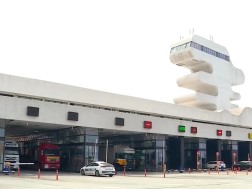
The geopolitical calculation behind linking the Turkish and Georgian railway networks is equally profound. By extending high-speed rail directly to the Sarpi border into Georgia, where 2,000 trucks currently endure daily gridlock, the project bridges the final gap between Türkiye’s industrial heartland and Georgia’s maritime gateways. This interconnection allows cargo arriving at Georgia’s Poti, Batumi or the burgeoning deep-water facility at Anaklia to transition seamlessly into the rails connected to Turkish network, and vice-versa. For the Middle Corridor, this synergy could slash transit times from 30 to under 15 days, making it a genuine competitor to the Suez Canal for high-value goods.
Furthermore, this maritime-centric vision recalibrates the competitive landscape related to emerging regional initiatives like the Trump Road for International Peace and Prosperity (TRIPP). While the TRIPP seeks to connect mainland Azerbaijan with its exclave of Nakhichevan, and further unlock international trade via a 43-kilometer southern corridor through Armenia, to be connected to Kars in Türkiye, it remains an inland solution subject to the complex, often unpredictable security dynamics especially considering the very close proximity to the border of two South Caucasus countries to Iran. The Samsun–Sarpi project, conversely, leans into the maritime strength of the Black Sea, cementing a Turkish-Georgian axis that secures the region as a Western-aligned logistics hub. In the escalating contest for Eurasian trade dominance, Ankara is betting that the reliability of sea-linked rail will ultimately outweigh the geopolitical volatility of the interior. By doing so, it is not just building a railway; it is anchoring the future of the Middle Corridor to the Turkish-Georgian rail and port infrastructure.
Author’s bio: George Katcharava is the founder of eurasiaanalyst.com, a geopolitical risk and advisory firm.