


By Salome Zaalishvili
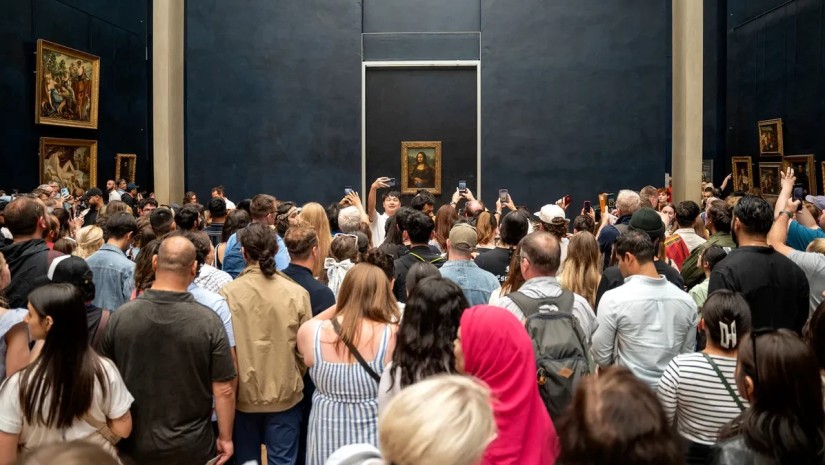
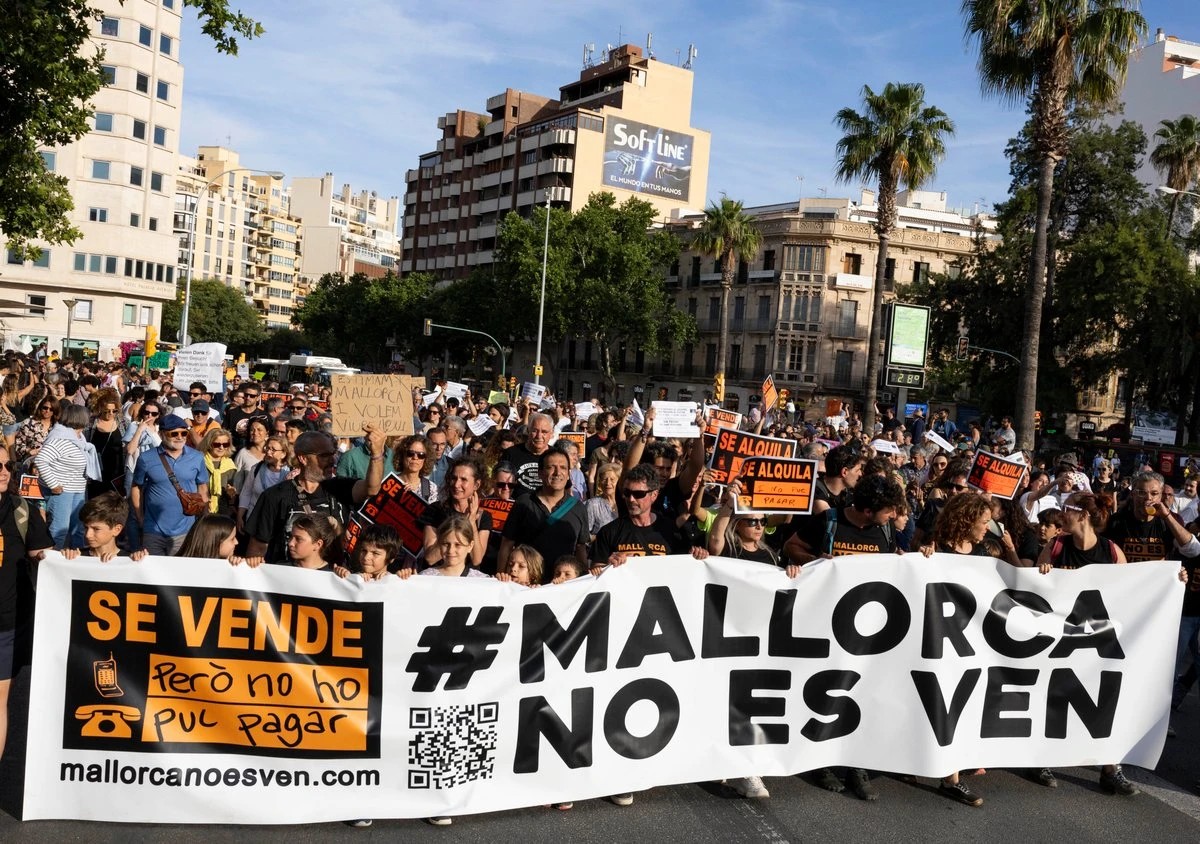
A wave of protests swept across Europe this summer. Protestors this year have taken to the streets across Spain, disrupted a billionaire’s wedding in Venice, and even caused a shutdown of the Louvre.
 AFP, Getty Images
One of the most notable protests took place on Mallorca, the Island home to just under 1 million people that welcomed 11.6 million international visitors in 2019. A Group of protestors vandalized rental cars across the island and spray painted the Catalan Phrase “tourism massiu o veïnes” (“mass tourism or neighbors”) across cars. The protests were halted by the pandemic, but as the pandemic restrictions began to be lifted an even larger wave of tourists swarmed Europe causing further worsening of the situation.
What does statistical data say
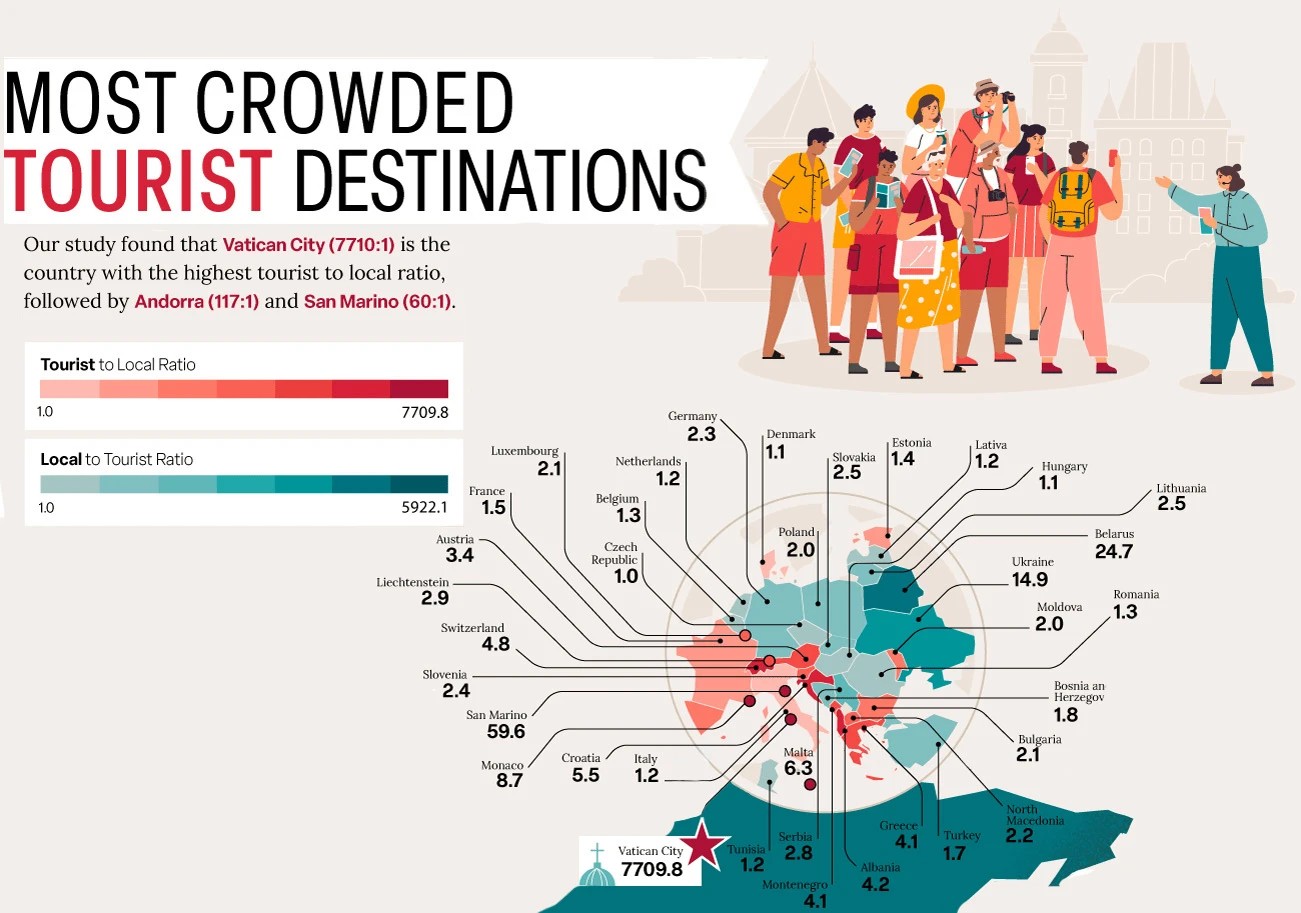
Tourist to local ratio across Europe in 2024
Over tourism is an issue mainly in countries where tourists outnumber residents. Barcelona alone welcomed over 12 million visitors. Italy was visited by 71.2 million people in 2024. Venice is one of the Italian cities suffering the most from over tourism, according to reports Venice alone has around 30 million nightly visitors each year. Greece had 35.9 million visitors in 2024. The island of Zakynthos is facing the highest tourism pressure with over 6 million yearly visitors while the island only has around 41 thousand residents.
Tourism is a large contributor in countries like Spain, Italy, Croatia and Greece, where over 10% of the countries’ early income comes from tourism.
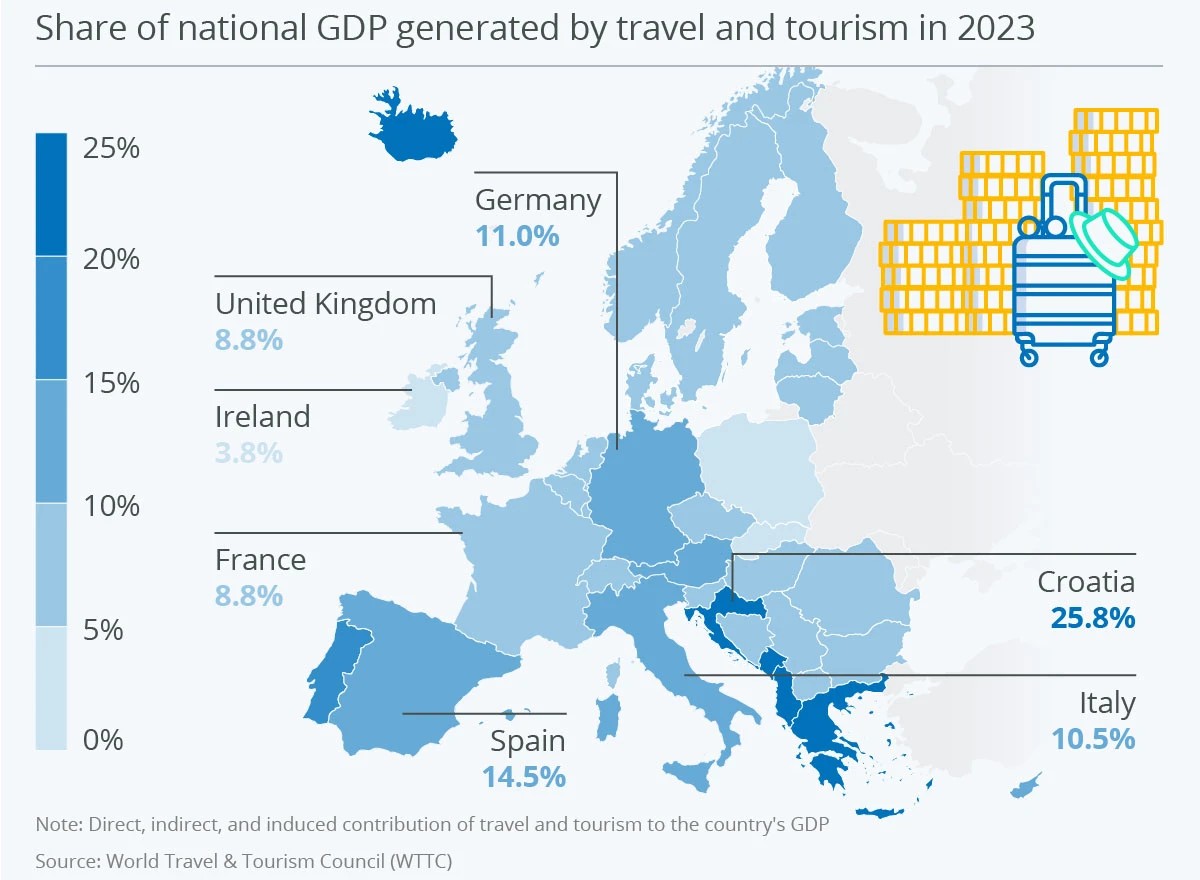
Source: Statista
Why are people protesting
Despite the numbers showing that over tourism affects most popular destinations, Spain and especially the Catalan region of Spain has been experiencing the most protests with the residents getting more frustrated with the situation as time passes. Let’s try and get to the bottom of what is going on in Spain.
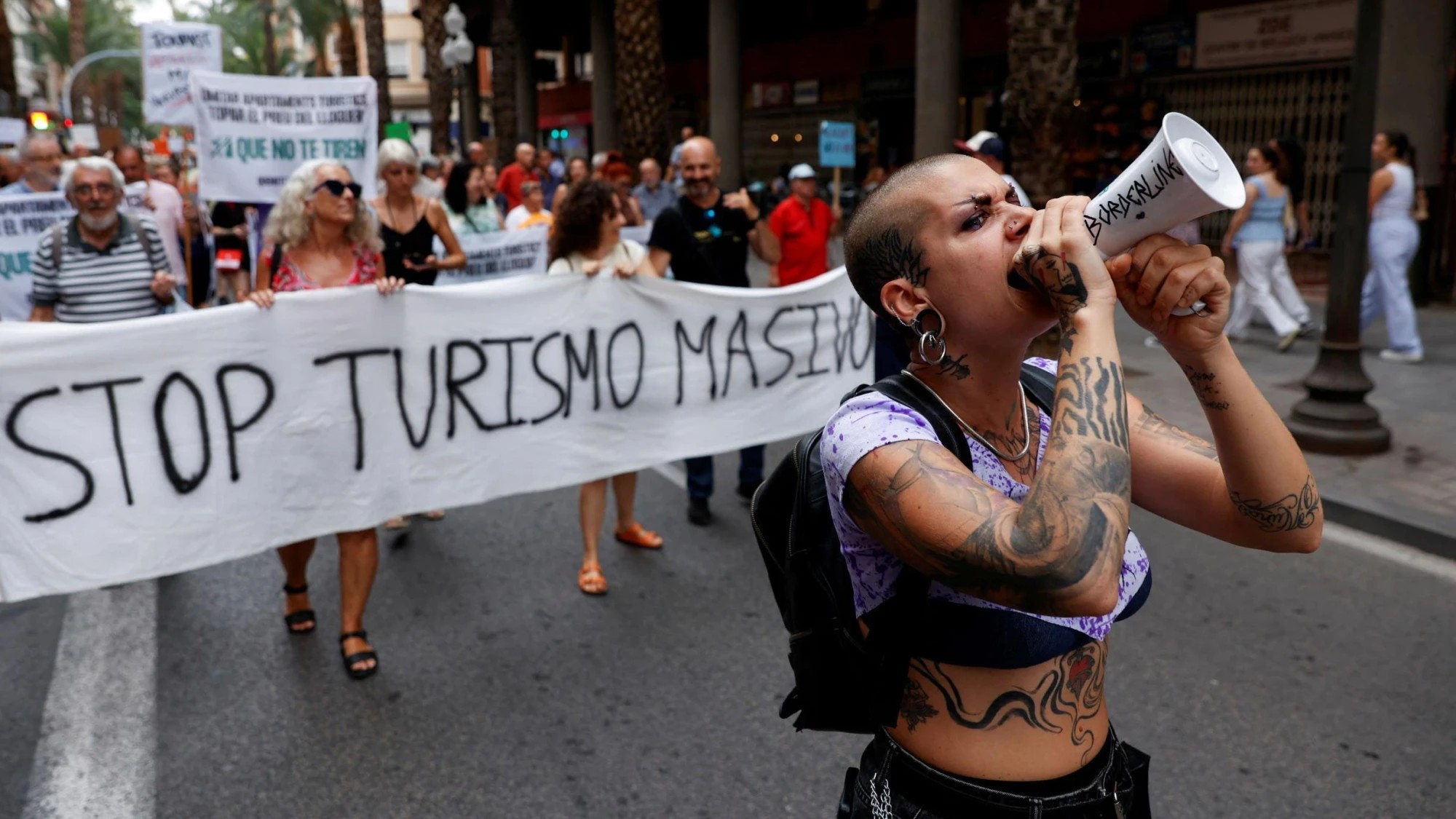 Source: Reuters
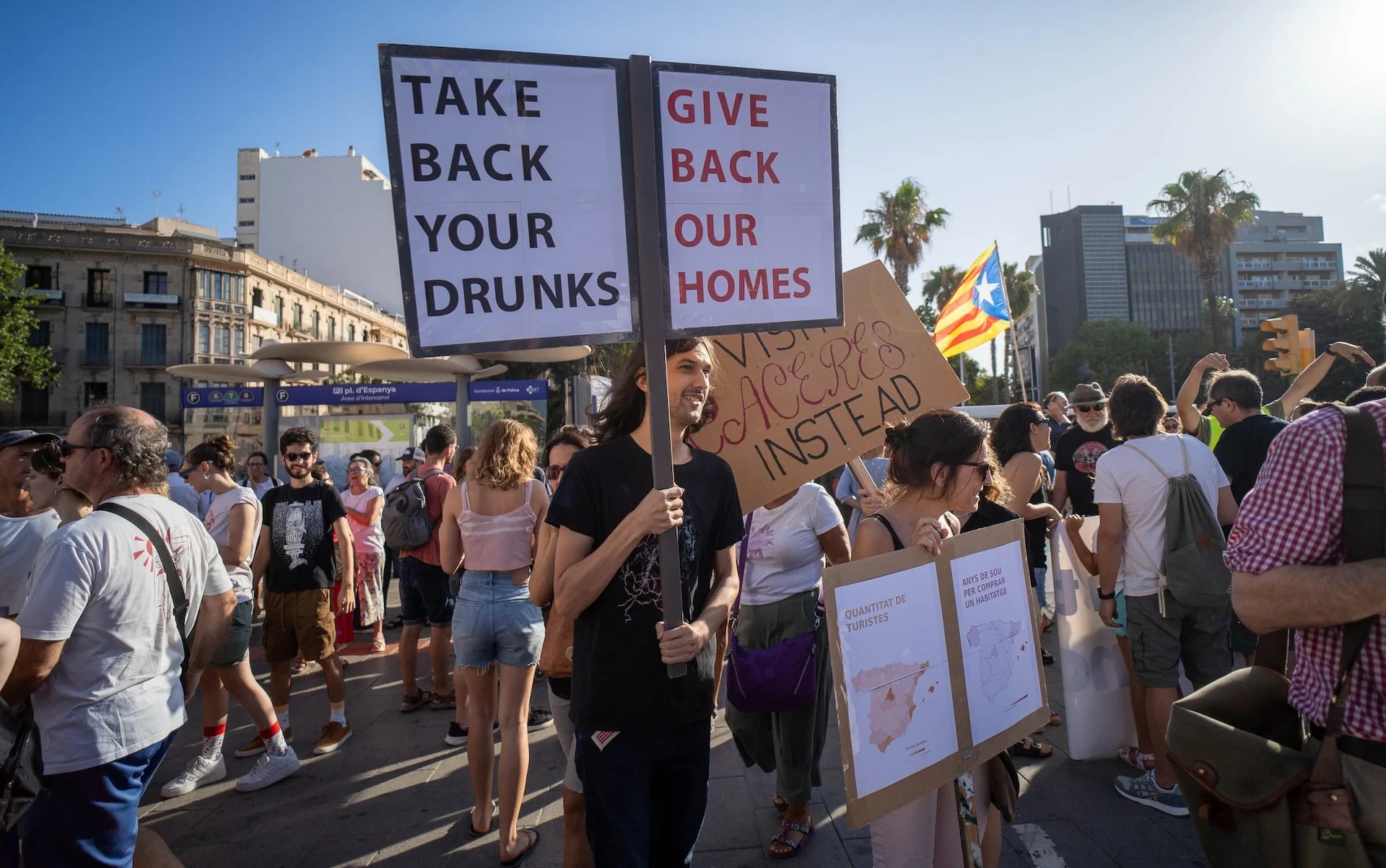
Housing is scarce and is slowly being converted to tourist accommodations while the housing that is left for the locals is simply unaffordable to rent. In Malaga, residents are being priced out of their long-term housing by their landlords, who seek to profit by converting the housing to short-term rentals; residents are forced out of affordable accommodations, many of these individuals are essential workers—including teachers, healthcare providers, and police officers—who are responsible for the city operating efficiently.
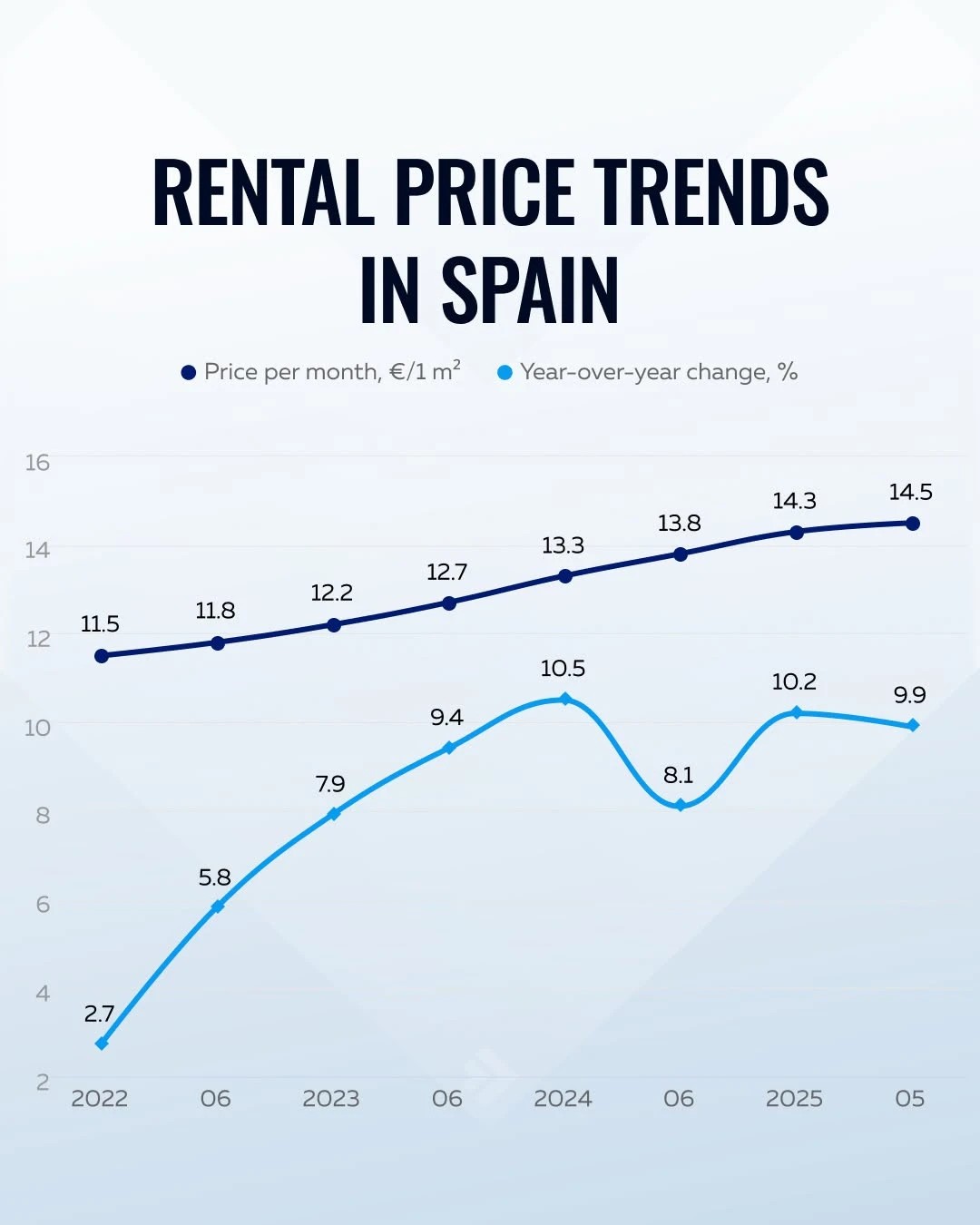 Average rental price change over 2022-2025
Although average salary differs from region to region from February of this year, minimum wage across Spain now equals €1,381, which by many in the country is considered to be quite low. Average rent in Spain is 1000 euros per month, in larger cities like for example Barcelona average rental price for one square meter is 23.9 euros, in Madrid it’s €21.7, San Sebastian - €18.5. The lowest price is in Ciudad Real - €7.4. Average rent increased by 3% in the last three years.
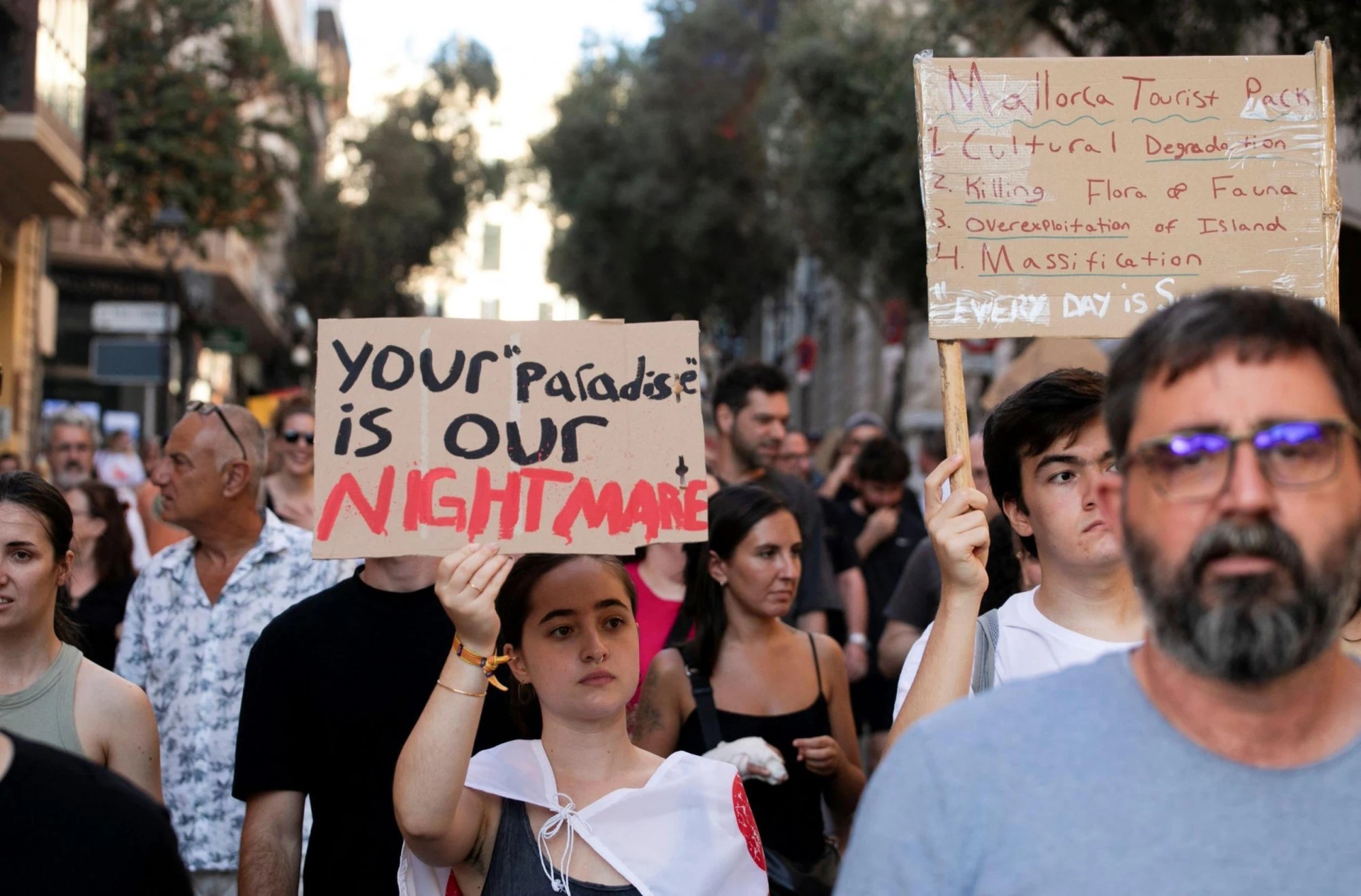
The issue of tourism isn’t just social, but cultural as well, despite the financial benefits according to studies over tourism leads to erosion of cultural identity. This is a phenomenon we are already experiencing, local residents are leaving historical neighborhoods due to overtourism, authenticity is being lost. When cultural practices and traditions are commodified solely for profit, it can undermine their intrinsic value and turn them into shallow tourist spectacles. Even importing alien cultural products from abroad in mass and presenting them to tourists were identified as negative outcomes.
Over tourism and what steps the government is taking to fight it
Tourists taking away housing from the locals is one of the reasons protestors cite for soaring prices on rent. The government has been trying to mitigate this issue, a request that has been backed by Madrid’s High Court has ordered rental platform Airbnb to immediately withdraw 5,800 property rental listings identified by the ministry located in different regions of Spain. The government called for airbnb to remove 66 000 additional rentals from their website, but the request seems to only have been a formality as no action has been taken.
A number of European countries have introduced tourist specific fines and regulations, for example, you’ll get fined 750 euros if you misbehave in public in Spain while budget airline Ryanair has introduced a 500 euro fine for disruptive behaviour. You might get fined while driving without proper footwear or completely barefoot in France, Spain, Italy or Greece for up to 300 euros. You’ll get fined up to 1500 euros if you’re dressed in a bikini in the streets of Albufeira, Barcelona, Cannes, Sorrento, Split or Venice. Even taking pebbles home from the beach on a number of Greek Islands will result in 1000 euro fines. Despite the fines, most of which are just a warning to not misbehave, experts say the number of tourists will only grow.
 წყარო: SOLARPIX.COM
There are 400,000 tourist-use housing units in Spain, according to the latest data from the Spanish Statistical Office. The government isn’t looking to completely remove tourist housing since the country is partially reliant on tourism for economic growth, for the entirety of Spain 15.6 percent of national GDP came from tourism in 2024. The government has approved 3.7 billion euro funding for an extension project for the El Prat Airport, located about 15 kilometers from the centre of Barcelona. The airport surpassed 50 million passengers – mostly tourists – and 182,000 tonnes of air cargo in 2024. More than 700 flights depart every day from El Prat, making it the sixth busiest airport in Europe. The Catalan government hopes to begin construction in 2030 and complete it by 2033, with the stated aim of increasing long-haul flights to make the region an intercontinental hub.
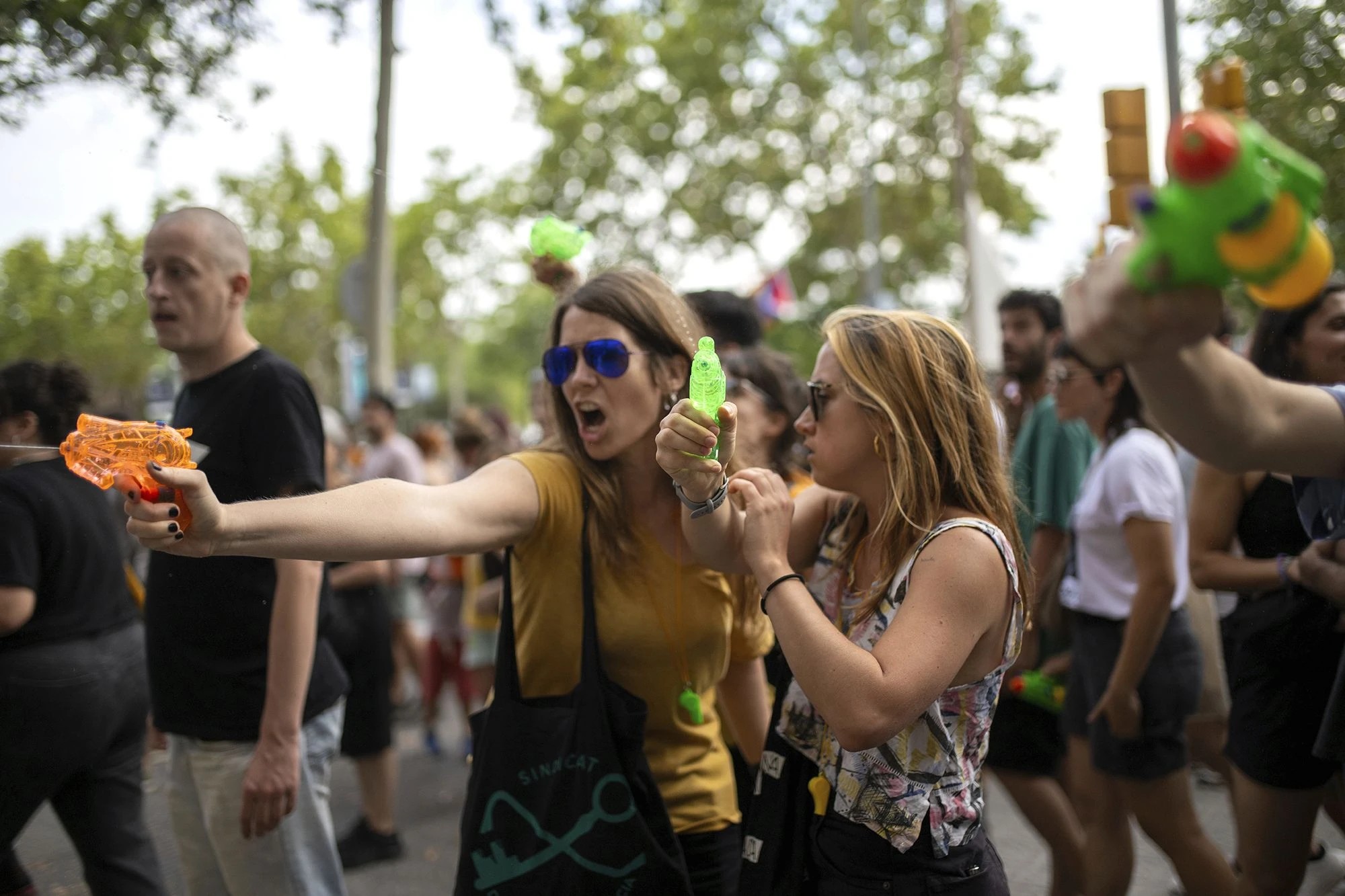 Anti tourism protestors fire water pistols at tourists
Spain can not keep up with the ever increasing demand on housing, 127,721 construction permits were issued in 2024, but according to the Bank of Spain the country’s housing deficit is between 400,000 and 450,000 dwellings.
To combat the housing deficit the government implemented the “Right to Housing Plan”, according to the official report Between 2016 and 2021 the city’s affordable housing has increased by 4,314 units, which have provided housing to 10,800 people. Surprisingly a number of these apartments are available for rent on Airbnb. The housing provided is negligible. The government has also made the process of obtaining short term rental licences more difficult, requiring ⅗ of the local HOA approval starting from March of this year. In Barcelona alone 10 000 short term rental licenses are set to expire by 2028 and the government has stated it has no plans to extend them.
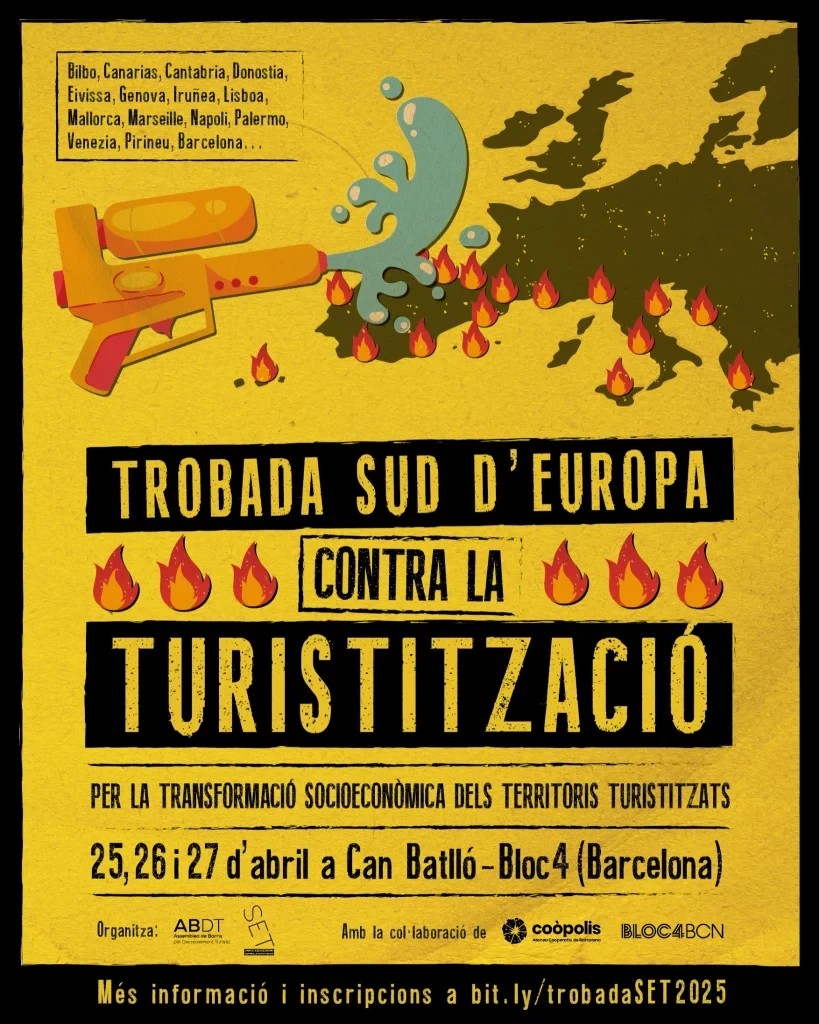 A poster made by the the anti tourist movement - South Europe against turistification
In short Spain and the Catallonian government in particular is trying to better the housing crisis while also supporting the development of tourism. It goes without saying that every radical anti tourism policy from the government will have devastating consequences for the residents dependent on tourism for income, if tourism stops, thousands will be left without jobs; But the changes the goverment is making are certainly not enough to ease the situation.