


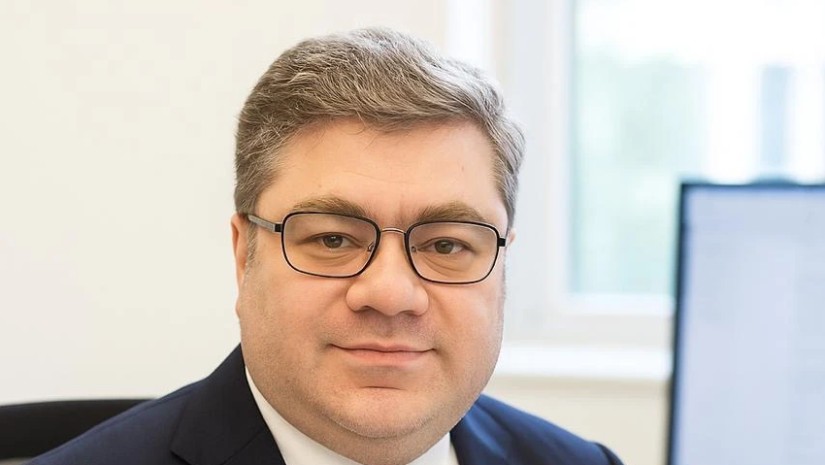

By George Katcharava
For decades, the May 9 Victory Day celebrations across the cobblestones of Red Square served as the Kremlin’s ultimate theater of imperial intimidation. It was a carefully choreographed, iron-plated spectacle of main battle tanks, mobile rocket launchers, and towering intercontinental ballistic missiles designed to project the illusion of permanent global dominance. But the subsequent, radically scaled-back iterations of this sacred national ritual have offered the world an entirely different kind of revelation: a public, unvarnished inventory of a superpower in systemic decline. Stripped of the modern heavy armor that once rattled Moscow's pavement, the heavily truncated ceremonies have proceeded under restrictive, defensive air-exclusion compromises. Rather than broadcasting absolute domestic strength, the empty tarmac has illuminated a hollowed-out state apparatus increasingly unable to protect its own heartland from the spillover of a stalemated war.
This physical shrinking of the capital's defenses directly mirrors a wider, catastrophic collapse of Russia's strategic posture on the frontlines. While Russian forces remain locked in costly, grinding attrition in Ukraine, Kyiv’s domestic defense industrial base has successfully scaled up asymmetric operations deep within the Russian rear. Long-range unmanned aerial vehicles and domestic cruise missiles now routinely threaten logistics infrastructure spanning a vast geography previously deemed untouchable. The humiliating reality that the Kremlin has been forced to rely on quiet tactical pauses or localized air-defense adjustments just to secure the physical safety of its parade grandstands shatters the state’s long-standing narrative of domestic invulnerability. By demonstrating an ability to project power over Russian skies during its most revered holiday, Kyiv has established a distinct psychological turning point, transforming the conflict from a localized border struggle into a direct threat to the internal stability of the Russian state.
Beneath the thin layer of state-sponsored patriotism, Russia's war economy is teetering on long-term structural exhaustion. To finance its ballooning military expenditures, the Kremlin has systematically cannibalized its long-term financial foundations, initiating massive liquidations of sovereign gold reserves through central bank channels to bridge a widening multi-trillion ruble budget deficit. This emergency pivot from asset accumulation to rapid asset depletion coincides with severe paralysis throughout the nation's energy sector. Continuous Ukrainian long-range strikes on major processing plants, such as the Lukoil-Permnefteorgsintez refinery, have knocked out critical crude distillation units and forced national processing throughput down to historic lows. To combat the resulting inflation and stabilize a volatile domestic currency, monetary authorities have been forced to maintain suffocatingly high interest rates. These restrictive fiscal policies actively crush private corporate margins, squeeze civilian social welfare budgets, and leave the broader economy entirely dependent on unsustainable state defense procurement.
This atmosphere of economic degradation has caused severe fractures to ripple through the normally compliant corridors of the Kremlin elite. The unwritten social contract of the Putin era, which long guaranteed wealth preservation in exchange for total political compliance, has broken down as state revenues plummet, forcing the regime to implement aggressive, coercive wealth-extraction strategies to plug fiscal shortfalls. Simultaneously, the drastic defensive measures required to protect metropolitan areas, such as multi-day digital blackouts and localized electronic jamming, have severely disrupted banking networks and corporate logistics. This collateral damage has provoked unprecedented public pushback from state-aligned media figures and corporate executives who find their business models upended by national defense paranoia. Behind closed doors, deep-seated friction is growing among the security services and economic technocrats who are increasingly dividing over post-war resource allocation, with a growing segment of the elite viewing the current policy path as an existential threat to their long-term survival.
Moscow’s internal decay is further highlighted by its profound diplomatic isolation, visually broadcast to the world by the empty grandstands of Red Square. The remarkably sparse guest list, featuring almost no major global dignitaries, signals a deep retreat of Russia's external influence. The attendance of leaders from Belarus, Kazakhstan, and Uzbekistan does not reflect genuine geopolitical alignment, but rather a delicate exercise in regional risk management by states seeking to maintain basic border stability and prevent sudden trade blockades from a volatile neighbor. Beyond these immediate nations and the completely dependent occupation authorities of Georgia's breakaway regions, Abkhazia and Tskhinvali region, the international community has staged a total boycott. Major powers from the Global South have pointedly avoided the event, emphasizing that Moscow has drifted to the margins of global diplomacy, cut off from the very partnerships it needs to offset its break with the West.
As Russia enters this volatile phase, a thick cloud of uncertainty hangs over its political future, with no clear rescue plan visible on the horizon. The state's immediate survival strategy relies on highly volatile maneuvers, including aggressive domestic capital extraction and reliance on temporary energy export workarounds to buy brief windows of fiscal breathing room. However, as liquid cash reserves burn away and the destruction of domestic refining capacity outpaces the state’s ability to repair it, these stopgap measures are rapidly approaching their structural limits. To maintain control in the face of this systemic decline, the regime appears poised to pivot toward an even more totalitarian domestic model, characterized by sweeping digital censorship and unavoidable mass mobilization. This path carries immense domestic risk, threatening to escalate current elite grievances into open internal power struggles and potentially pushing a fractured state toward structural breakdown, underlying what we are witnessing today are the fracturing fault lines of a decaying Russian empire. Left unmanaged, this slow-motion collapse threatens a descent into volatile, unpredictable chaos. A toxic cocktail is brewing, mixed from deep elite grievance, a financially choked population, and simmering unrest across the ethnic republics. After a reign spanning generations, and a war that has now outlasted World War II, the exhaustion belongs to more than just Vladimir Putin, it belongs to Russia itself. The world must watch these internal tremors with high vigilance. History proves that when the end arrives, it will come with sudden, transformative velocity.
Author’s bio: George Katcharava is the founder of eurasiaanalyst.com, a geopolitical risk and advisory firm.