


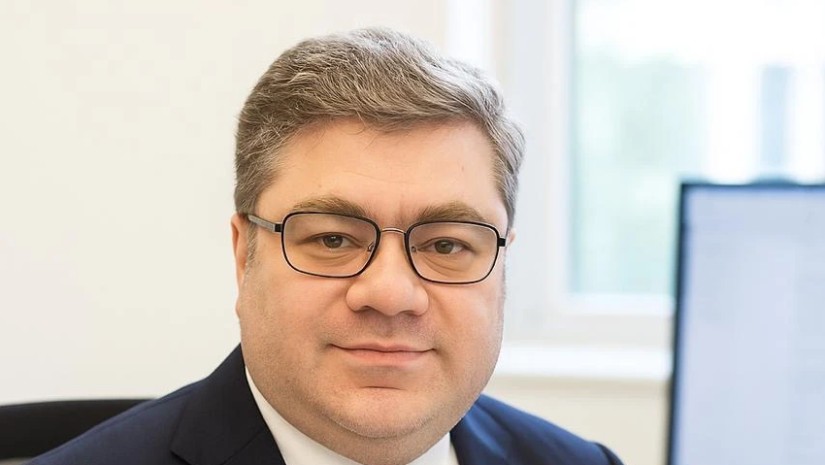

By George Katcharava
The decision by the United Arab Emirates to end its OPEC and the wider OPEC+ membership represents more than a mere administrative divorce; it is a fundamental realignment of the energy world. For decades, the cartel’s power rested on the uneasy but effective duopoly of Saudi Arabia and the UAE, whose combined spare capacity acted as the world’s central bank for oil. By choosing to walk away, Abu Dhabi has effectively declared that the era of collective price-fixing is a luxury it can no longer afford. The move signals a shift from a "price-first" philosophy to a "volume-first" strategy, driven by the cold realization that in an era of accelerating energy transition, oil left in the ground today may be worth nothing tomorrow.
In the global oil market, the short-term impact remains deceptively calm, largely due to the geopolitical fog of the ongoing conflict in the Middle East. With the Strait of Hormuz effectively shuttered, the UAE’s physical ability to flood the market is temporarily constrained. However, as the dust settles, the medium-term outlook is decidedly bearish. Abu Dhabi has spent billions to reach a production capacity of five million barrels per day. It has no intention of keeping that capacity idle to subsidize the budgets of less efficient producers. This signals a new era of "every nation for itself," where the low-cost producers of the Gulf will use their competitive advantage to squeeze out high-cost marginal barrels from their competitors.
For the organization itself, the UAE’s departure is an existential blow. The cartel’s ability to manage global supply now rests almost entirely on the shoulders of Saudi Arabia, creating a fragile "single-point-of-failure" dynamic. Without the UAE to share the burden of production cuts, Riyadh must choose between bearing the cost of market stability alone or engaging in a ruinous race to the bottom.
Perhaps nowhere is the shock of this exit felt more acutely than in Moscow. For Russia, the UAE’s departure is a strategic catastrophe that threatens the very pillars of its wartime economy. However, the threat to Russia's status as an energy superpower is not merely a matter of cartel politics; it is being physically dismantled at the water's edge. Even as the UAE prepares to flood the market with low-cost crude, Russia is finding it increasingly difficult to get its own oil to market at any price.
A relentless campaign of Ukrainian drone strikes has turned Russia’s once-secure export infrastructure in the Baltic and Black Seas into a liability. Refineries and critical loading terminals, such as those at Ust-Luga and Novorossiysk, have been repeatedly hobbled, forcing a redirection of flows that strains an already aging pipeline network. These disruptions do more than just cut immediate revenue; they signal to global buyers that Russia is no longer a "reliable" supplier. The insurance premiums and logistical headaches associated with navigating contested waters are effectively imposing a "security tax" on Russian Urals, further eroding the margins that the Kremlin desperately needs to fund its state apparatus.
This physical vulnerability exacerbates the fiscal vise tightening around Moscow. Roughly one-third of the Russian federal budget is directed toward the "Special Military Operation" and related defense costs. This militarized economy is predicated on oil remaining comfortably above $70 a barrel. Should the UAE’s exit trigger a market-share war, Russia faces a perfect storm: falling global prices coincided with rising domestic costs to repair and defend its export hubs. Lower revenues will force the Kremlin into a series of impossible choices: debasing the ruble further, which risks domestic hyperinflation, or draining the remaining liquid assets in the National Wealth Fund.
Furthermore, the UAE’s move strips Russia of its most effective tool for diplomatic leverage. Moscow used the OPEC+ framework to project the image of a "co-manager" of the global economy. Without the UAE’s participation, and with its own export infrastructure under fire, Russia’s claim to being a dominant player in the global oil trade looks increasingly hollow. The UAE is positioning itself as a sleek, reliable, and unencumbered alternative, while Russia remains mired in a conflict that is literally burning through its energy future.
Ultimately, the beneficiaries of this new reality are the world’s major consumers. Cheaper oil, driven by UAE expansion, acts as a massive tax cut for the global economy. Conversely, the losers are the sanctioned states, most notably the one in the Kremlin. As Abu Dhabi trades its seat at the table for a larger share of the market, it has effectively rewritten the rules: in the twilight of the petroleum age, the race is to the last barrel sold—and Russia, hampered by sanctions, war costs, and burning terminals, is losing its stride.
Author’s bio: George Katcharava is the founder of eurasiaanalyst.com, a geopolitical risk and advisory firm.