


Rainer Michael Preiss – Global Markets Commentary
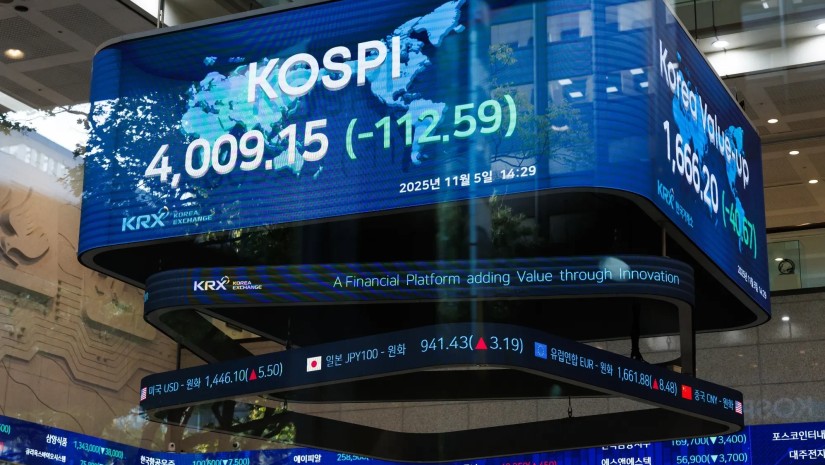
South Korean stocks look ready to enter a new phase as a deep drawdown, a foreign exodus and an unwinding of leveraged positions have left the high-profile Kospi Index far less crowded.
South Korea's equity market has become one of the world's most fascinating—and volatile—investment stories during the global artificial intelligence (AI) boom. The KOSPI, traditionally viewed as a cyclical export-driven market and a reliable barometer of global industrial demand, has evolved into one of the world's most concentrated AI equity markets. While this transformation has generated exceptional returns for investors, it has also introduced levels of volatility rarely seen in a developed equity market.
For global private clients and family offices, understanding the drivers of this volatility is essential. The recent experience demonstrates both the extraordinary opportunities created by technological innovation and the risks of excessive concentration, leverage and investor exuberance.
The principal driver of the KOSPI's remarkable performance has been South Korea's dominant position in the global semiconductor industry. Samsung Electronics and SK hynix have become indispensable suppliers of advanced memory chips used in AI servers, cloud computing and large language models. Explosive global demand for High Bandwidth Memory (HBM) has transformed both companies into central beneficiaries of the AI investment cycle. As their market capitalisations expanded rapidly, they came to represent more than half of the KOSPI's total market value, making the index increasingly dependent on the fortunes of just two companies.
This concentration created substantial upside during the rally but also amplified downside risk. Any reassessment of AI-related earnings expectations or semiconductor valuations immediately translated into large swings for the entire Korean equity market. Rather than reflecting weakness across the broader economy, much of the KOSPI's volatility has been driven by the heavy weighting of these semiconductor leaders.
A second important factor has been the rapid expansion of leveraged exchange-traded funds (ETFs). During the AI rally, leveraged single-stock ETFs linked to Samsung Electronics and SK hynix attracted significant inflows from retail investors seeking to magnify returns. While these products enhanced gains during rising markets, they also intensified selling pressure during corrections as fund rebalancing and margin-related selling accelerated declines.
Foreign investor behaviour has further amplified volatility. Korea remains one of Asia's most liquid equity markets, and global institutional investors actively adjust exposures in response to changes in semiconductor demand, U.S. interest rates, geopolitical developments and currency movements. During periods of elevated uncertainty, foreign investors often reduce exposure quickly, increasing short-term price swings. More recently, however, several global asset managers have begun selectively rebuilding positions as valuations became more attractive following the correction.
Investor psychology has also played an important role. The excitement surrounding artificial intelligence encouraged many investors to extrapolate extraordinary earnings growth far into the future. As optimism intensified, valuations expanded rapidly and retail participation surged. History repeatedly demonstrates that periods of technological innovation often create cycles of excessive optimism followed by sharp corrections. Similar patterns occurred during the railway boom, the internet bubble and previous semiconductor cycles.
Importantly, the recent volatility should not be interpreted as evidence that the AI investment theme has ended. Instead, it reflects the distinction between long-term structural growth and short-term market positioning. The demand for AI infrastructure, memory chips, cloud computing and advanced semiconductors continues to grow rapidly. What has changed is investor expectations and positioning rather than the underlying technological trend.
For long-term investors, South Korea continues to offer several structural advantages. The country remains a global leader in memory semiconductors, advanced manufacturing, batteries, displays and increasingly AI hardware. Corporate governance reforms, efforts to reduce the long-standing "Korea Discount," and improving shareholder returns also support the long-term investment case. Nevertheless, investors should recognise that Korea's market is likely to remain more volatile than many developed markets because of its concentration in technology exports and global cyclical industries.
Private clients should draw several important lessons from the recent experience. First, technological leadership does not eliminate valuation risk. Even outstanding companies can experience substantial share price corrections when expectations become excessive. Second, diversification remains essential. Investors should avoid allowing any single technology, country or sector to dominate a portfolio, regardless of how compelling the investment narrative may appear. Third, leverage can significantly magnify losses during periods of market stress and should be employed cautiously, particularly in already volatile markets. Finally, periods of elevated volatility often create opportunities for disciplined long-term investors who maintain liquidity and focus on business fundamentals rather than short-term market sentiment.
From an asset allocation perspective, South Korea remains an attractive strategic component of global emerging-market and Asia-Pacific portfolios. Rather than attempting to time short-term swings, investors may benefit from gradually accumulating positions during periods of market weakness through disciplined portfolio rebalancing.
The AI revolution is likely to remain one of the defining investment themes of the coming decade. South Korea, through companies such as Samsung Electronics and SK hynix, is positioned to remain at the centre of this transformation. However, the extraordinary volatility experienced during the AI boom serves as an important reminder that even the strongest long-term investment themes can experience significant corrections. For sophisticated global private clients, the key is not to avoid volatility altogether but to distinguish between temporary market dislocations and permanent changes in business fundamentals.
Successful long-term investing is ultimately determined not by avoiding volatility, but by understanding it, managing risk prudently and maintaining a disciplined investment process. In that respect, the recent experience of the KOSPI provides valuable lessons for every globally diversified investor.
Rainer Michael Preiss, Partner & Portfolio Strategist, DAS family office, Singapore