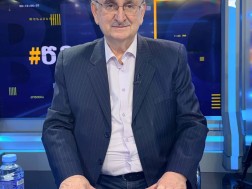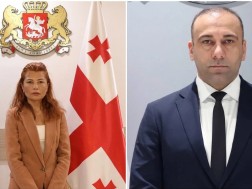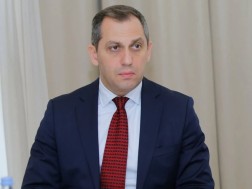


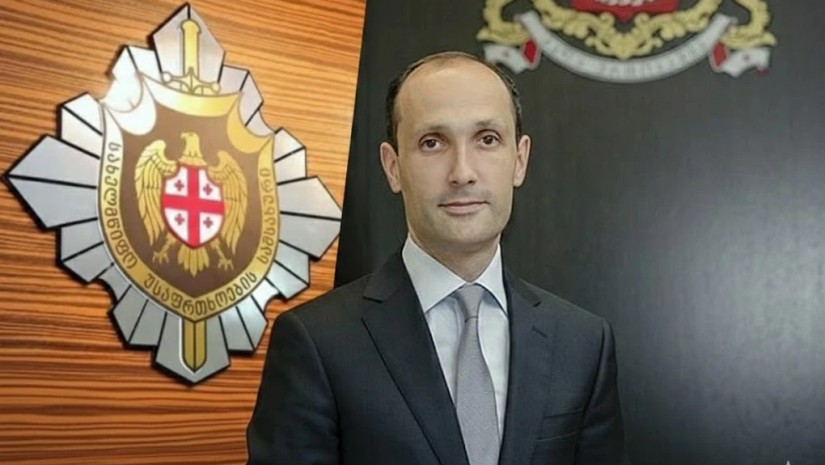

The State Security Service of Georgia (SSSG) has confirmed it is investigating a gas supply contract that may have worsened the country’s energy terms. The agency released the statement shortly after former Deputy Prime Minister Levan Davitashvili spoke to the media following a six-hour questioning session at the Anti-Corruption Agency.
According to the SSSG, Davitashvili was questioned strictly within the framework of a criminal investigation and not, as he suggested, during a general meeting to discuss national gas-related risks. The agency publicly contradicted his version, asserting that the questioning focused on specific risks associated with Georgia’s gas supply and the allegedly unfavorable contract terms under review — not on EU-related gas supply issues.
“If further misinformation, speculation, or misinterpretation occurs, we are ready — with the interviewee’s consent — to make the interrogation protocol public,” the agency stated.
Earlier in the day, before Davitashvili exited the building, the SSSG reported that he and former Georgian Energy Development Fund head Giorgi Chikovani were being questioned regarding a contract signed with a major oil company. The name of the company has not been disclosed.
Speaking to journalists after the questioning, Davitashvili said the discussion centered on Georgia’s involvement in supporting Europe’s gas supply and potential risks associated with this role. He also noted that the conversation included long-term strategies for ensuring stable domestic gas supply, including the extension or revision of existing contracts. He declined to answer further follow-up questions.
Although Davitashvili did not specify the company involved, context suggests the matter may relate to cooperation with SOCAR, Azerbaijan’s state oil and gas company.
Georgia’s 2024 Natural Gas Supply Security Report indicates that the country has played a key role in helping Azerbaijan increase gas deliveries to the European Union. According to the report, Georgia agreed to SOCAR’s request to temporarily receive part of its allocated gas through the Kazakh–Saguramo pipeline, thus freeing capacity in the South Caucasus Pipeline (SCP) for additional EU-bound gas.
As a result, approximately 1.1 billion cubic meters of additional Azerbaijan gas became available annually for European customers. BMG reports that this arrangement continued into 2025. Under the Azerbaijan–Georgia agreement, if for any reason Georgia cannot receive gas through the Kazakh–Saguramo line, it retains the right to take its allocated volumes back through the SCP.
The SSSG investigation is ongoing, focusing on whether decisions surrounding these supply mechanisms or associated contracts may have put Georgia at a disadvantage.