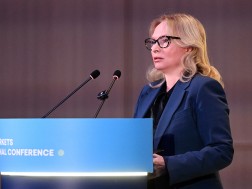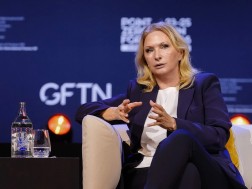


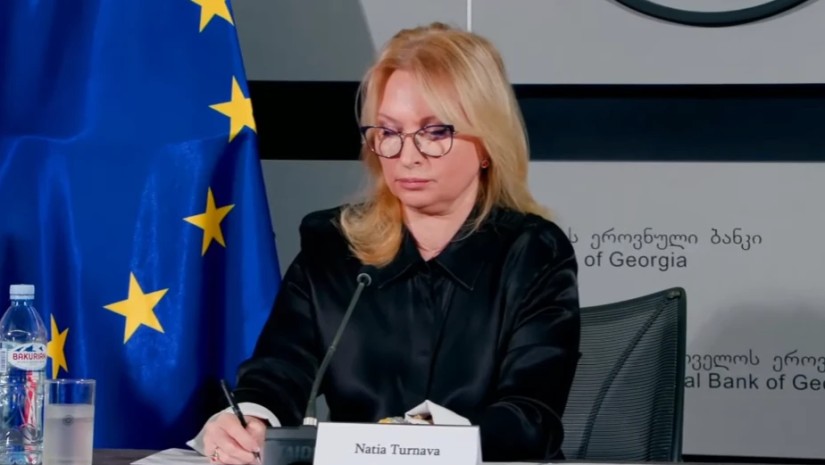

National Bank of Georgia (NBG) President Natia Turnava told Parliament that the bank’s record-breaking currency intervention ahead of the 2024 elections was driven solely by monetary policy—not politics. She explained that in autumn 2024, market sentiment deteriorated due to heightened political polarization and uncertainty surrounding the elections, causing pressure on the exchange rate despite strong macroeconomic fundamentals.
Turnava stressed that foreign exchange interventions are an operational decision by relevant NBG departments and do not require board approval, as they must often be executed within seconds. According to her, the economy at the time showed no signs of weakness—growth, exports, fiscal indicators, and the current account were all stable—so the depreciation pressure came purely from market fears.
The NBG reacted to prevent a potential chain reaction: rapid lari depreciation, increased dollarization, and harm to businesses and households. Turnava said the intervention was large because the currency market itself has grown. She argued that it was justified, as the bank expected uncertainty to ease after the elections, which, she noted, is exactly what happened. Businesses that had bought excess dollars later sold them back, enabling the NBG to replenish reserves.
In October 2024 alone, the NBG sold a historic $627 million—the largest monthly intervention in its history. Since then, reserves have started recovering and reached $6.47 billion in the latest report, with deposits showing notable “de-dollarization” of about 6 percentage points.