
Georgia’s revised 2026 state budget cuts funding for several major infrastructure programmes under the Ministry of Regional Development and Infrastructure. Educational infrastructure funding is reduced by GEL 238 million, while tourism and sports infrastructure allocations each fall by GEL 114 million.
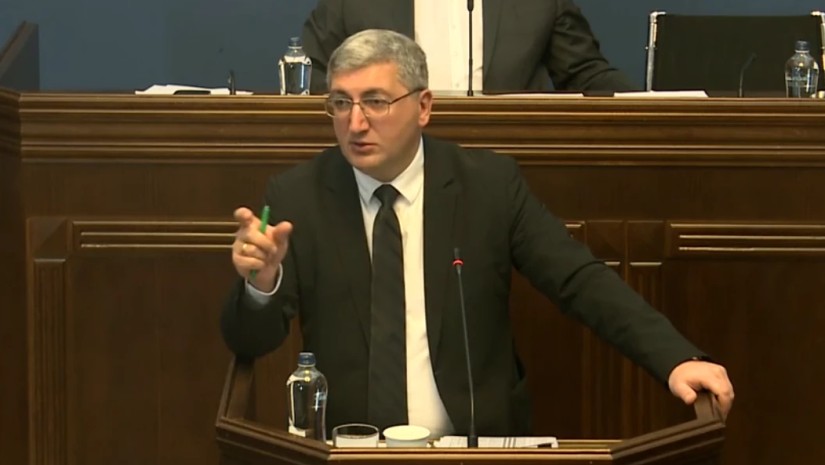
The reasons for the underspending were discussed at a meeting of Parliament’s Finance and Budget Committee, where First Deputy Finance Minister Giorgi Kakauridze presented the nine-month budget execution report and the revised 2026 state budget.
Responding to questions from opposition MP Giga Parulava, Kakauridze said planning shortcomings were not the main problem. Instead, delays largely stemmed from systemic difficulties during project implementation.
One of the key issues, particularly over the past two years, was the discrepancy between tender estimates and actual market prices. To address this, the government tasked the Levan Samkharauli National Forensics Bureau with calculating market prices for individual construction components. The data is updated monthly, and the first report was published in June.
Kakauridze said more realistic cost estimates had helped prevent situations in which companies won tenders but later faced serious financial difficulties while carrying out the work.
Another major problem was the lack of price indexation in long-term projects financed by the state budget. Unlike projects funded by international financial institutions, state procurement contracts did not allow prices to be adjusted when construction materials became more expensive.
According to Kakauridze, legislative changes have now extended the indexation mechanism to state-funded projects, allowing contract prices to be adjusted automatically in response to increases in construction costs.
Regarding tourism infrastructure, he clarified that the funding reduction mainly affects urban infrastructure renewal. Meanwhile, GEL 82 million has been allocated for the development of mountain resorts, with spending reflected partly in current projects and partly in next year’s plans.
Kakauridze said the changes would not eliminate all delays caused by individual contractors, but should significantly reduce large-scale annual underspending across infrastructure programmes.