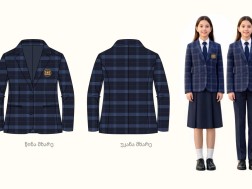




Georgia’s textile industry says the country is capable of producing the GEL 46 million worth of school uniforms ordered by the government, provided procurement is planned in advance and local manufacturers are given a realistic opportunity to compete. Speaking to BMGTV, Davit Bidzinashvili, head of the Georgian Apparel and Footwear Manufacturers Association and owner of Iveria Tex, said the contract awarded to a Chinese company highlights weaknesses in the procurement process rather than a lack of domestic manufacturing potential. He argued that closer cooperation between the government and businesses is essential if the industry is to expand and create jobs.
Bidzinashvili said Georgian manufacturers were aware of the planned procurement but were discouraged by the scale of the order and the short production timeline. He noted that producing more than 1.8 million school uniforms within just a few months would have been impossible due to limited production capacity and the difficulty of sourcing millions of meters of fabric on short notice. He also questioned the quality specifications and pricing of the imported uniforms, pointing out that Georgian factories already manufacture more complex uniforms at competitive costs and that local production generates broader economic benefits through employment and tax revenues.
According to Bidzinashvili, the solution is not to compete with China solely on price but to adopt an industrial policy that supports domestic manufacturers. He said long-term government orders could transform the sector within two to three years, encouraging investment, expanding production capacity, and helping bring skilled workers back to Georgia. He also warned that many sewing factories have downsized in recent years, while qualified workers have emigrated due to the lack of stable orders.
The industry has proposed four key recommendations to the government: announce school uniform procurement plans well in advance to allow manufacturers to prepare; divide large contracts into smaller lots so Georgian companies can participate; introduce a 10–15% price preference for locally produced goods in public tenders; and provide multi-year guaranteed state procurement to encourage investment, create jobs, and strengthen Georgia’s textile industry. Bidzinashvili stressed that without coordinated action between the government and the private sector, the country will continue missing opportunities to develop local manufacturing and retain major public procurement spending within Georgia.