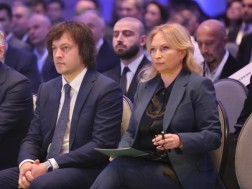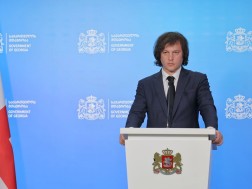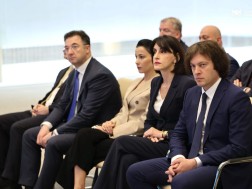


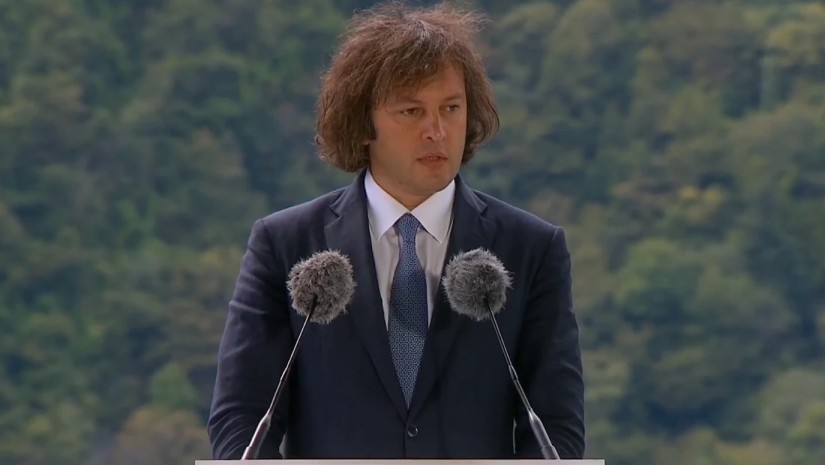

GD Prime Minister Irakli Kobakhidze said that today the Georgian state is strong enough to ensure the implementation of large-scale energy projects, including strategic hydro and renewable initiatives. Speaking at an event dedicated to the Day of the Georgian Energy Worker, Kobakhidze noted that in past years, harmful practices and even “economic sabotage” slowed the development of the sector, but stressed that these issues are now being resolved.
According to him, one of the key problems was the reselling of permits, which had acquired a systemic form and hindered project development. He also said that foreign-funded organizations had directly sabotaged strategic projects, causing the state to incur damages of “tens of millions of GEL.” “Unfortunately, the state did not have sufficient resources then to confront such sabotage, although today the state is strong enough to ensure the smooth implementation of any large projects, including Khudoni, Nenskra, and Namakhvani,” Kobakhidze emphasized.
GD Prime Minister outlined ambitious goals for the sector: expanding installed capacity to 8,000 MW by 2028 and 10,000 MW by 2030, ensuring Georgia’s self-sufficiency in electricity. He highlighted that since 2012, the country has added over 1,000 MW to its system compared to just 150 MW in 2004–2012, with the total capacity now reaching around 4,600 MW. New hydropower, thermal, solar, and wind projects have all contributed to this rapid growth.
Kobakhidze also pointed to major progress in gasification. Since 2012, natural gas has been brought to 860 settlements, raising the national gasification rate from 55% to much higher levels and benefiting hundreds of thousands of citizens. He further noted that optimization efforts in state-owned enterprises operating in the energy sector saved more than 370 million GEL last year, with the funds reinvested into the energy system and the broader economy.