





The Georgian government has authorized a €1.4 million simplified procurement to enhance natural disaster monitoring and early warning systems in high-risk glacial valleys. According to the decree, the National Environmental Agency will finance the project directly from the state budget, aiming to better protect settlements and infrastructure exposed to landslide and geodynamic hazards.
The procurement includes €613,600 for installing and launching a landslide monitoring system in the Kazbegi municipality, covering drone-based surveys, a monitoring web portal, expert support, staff training, warranty service, and technical maintenance. An additional €786,400 will fund feasibility studies and detailed designs for early warning systems across four high-risk locations, including field research, hazard analysis, and GIS-based reporting.
The project timeline requires the Kazbegi monitoring system to be operational by November 2026, while feasibility studies for Racha’s Glola village and Svaneti’s Jabeshi must be completed by November 2026. Studies for Stepantsminda and Kakheti’s Dartlo must be finalized by November 2027. The agency states that accelerated implementation is necessary due to increasing natural hazard activity and newly identified high-risk “hotspots.”
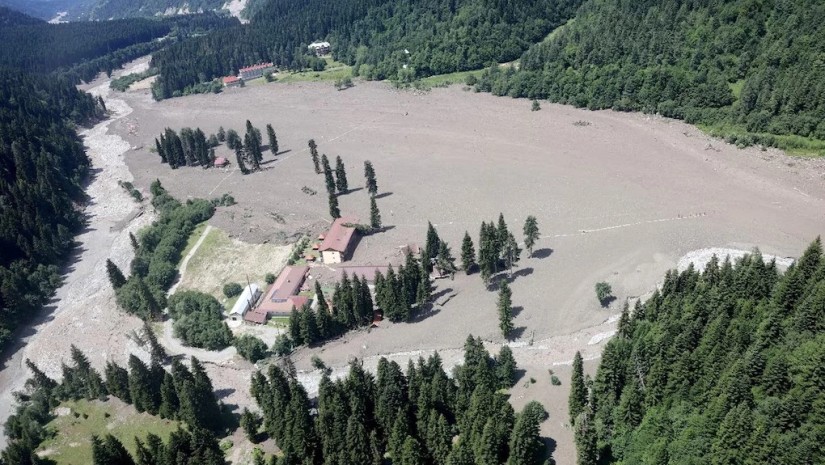
The justification cites lessons from the August 3, 2023 Shovi disaster, which killed 32 people. Swiss experts involved in post-disaster analysis confirmed rising risks along Caucasus mountain slopes, requiring urgent intervention. Recent research projects (2024–2025) further highlighted the need for advanced monitoring and early warning systems, with immediate fieldwork required ahead of peak spring–summer hazard seasons.