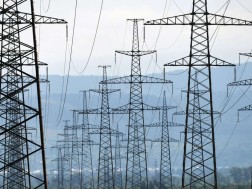



It is now widely acknowledged across both the private and public sectors that developing renewable energy sources — hydro, wind, and solar — is critically important to meet the growing demand for electricity in Georgia. Despite differing views on which or what type of renewable energy projects the country should prioritize, there is a broad consensus that increasing installed capacity, reducing bureaucracy, and attracting both domestic and foreign investment into the sector are essential for the further development of the electricity sector.
In 2023–2024, a total of approximately 90 projects with a combined installed capacity of 1,100 MW were identified as a result of two capacity auctions held under the Contract for Difference (CfD) support scheme. Further renewable energy projects are expected to emerge from future capacity auctions or direct selection processes. Also notably, the Ministry of Economy and Sustainable Development of Georgia has recently announced a plan to nearly double the country's existing electricity generation capacity over the next five years - a strong signal for investors.
With a solid pipeline of renewable projects, financing of these projects is becoming increasingly relevant, including through attracting local and foreign equity investors. Below is a brief overview of key matters for both a seller and a buyer to consider when doing an M&A transaction in the energy sector.
The process of preparing a renewable greenfield or brownfield project for sale can be intensive. In a more organized sale process, a seller would typically engage qualified advisors, such as investment banks, legal counsels, and tax experts, that are tasked to make the project attractive for investment. At the initial stage, this involves, among other things, conducting a high-level due diligence of the project company, developing a financial model, carrying out a project valuation, preparing an information memorandum, etc. The seller might also consider engaging a reputable third-party firm to conduct a vendor due diligence of the project and give potential investors greater comfort regarding the project.
In the Georgian context, once the parties agree on the key commercial terms, it is typically believed that the process should go smoothly to the closing by “simply” reflecting the commercial terms in contracts. In practice, however, moving from a handshake on commercial terms to the final closing of the transaction is often more complex than anticipated, and the parties are likely to face various challenges throughout the process.
First and foremost, it is important for both parties that, even if only a general understanding on commercial matters exists, a term sheet (memorandum, letter of intent, etc.) is executed. This may be binding, non-binding or partially binding. Even when the arrangement is non-binding, it is important to document the agreement in writing, so that there is clarity as to what has already been agreed and what issues remain to be negotiated. The term sheet would typically include confidentiality provisions and, in some cases, an exclusivity undertaking. The latter restricts the seller from engaging in negotiations with other parties or investors during the transaction process. Once a term sheet is put in place, the potential buyer typically commences a due diligence which may cover legal, tax, financial, technical, and environmental matters. The scope of the due diligence and the key areas covered will largely depend on the stage of development of the renewable energy project.
Renewable energy projects can be at different stages of development when sold, including:
I. Pre-feasibility stage projects
At the initial stage, the project is identified, a project company (target/SPV) exists, and a preliminary feasibility study is completed. This preliminary study covers, among other things, the proposed grid connection and the capacity of the grid to absorb the generated electricity. Typically, such projects are either going through a capacity auction/direct selection process and/or are already selected and the relevant concept notes are being prepared.
II. Projects with a signed feasibility agreement
At this stage, the results of the auction (or direct selection) and the project concept note are approved by the Government of Georgia, and a feasibility study agreement for the power plant is signed with the winning/selected project company. The feasibility study is underway.
III. Projects with an approved feasibility study
At this stage, based on the results of the full feasibility study, the viability of the project is conclusively determined, and the project is approved by the Government.
IV. Projects with a signed implementation (PPP) agreement
Renewable energy projects that benefit from support mechanisms (e.g. a premium tariff, or a CfD) are generally implemented through public-private partnerships and are treated as concessions under the existing PPP law. If the Government approves the full feasibility study, an implementation agreement (a public-private partnership agreement) is executed with the project company through direct negotiations. In addition, the Electricity System Commercial Operator (ESCO) will enter into a financial settlement agreement and/or a guaranteed power purchase agreement with the target company in accordance with the applicable support scheme.
V. Ready-to-build projects
At this stage, the target company has all necessary permits and rights to commence construction of the power plant on the project site.
To begin construction, the project owner typically runs a tender process and selects a contractor to build the power plant.
Due to the complexity of such projects, one of the most widely used contract forms is the FIDIC international standard form. FIDIC offers several standard contract templates, each differing mainly in how risks are shared between the parties. For instance, under the FIDIC Red Book, the contractor builds the power plant based on a design provided by the project owner. Under the FIDIC Yellow Book, the contractor is responsible for both the design and construction, meaning the contractor takes on the risks associated with both. Finally, under the FIDIC Silver Book, which is designed for EPC (Engineering, Procurement and Construction) projects, nearly all major risks are placed on the contractor.
Another important consideration is the status of the project with respect to grid connection. As a rule, project companies apply to the Georgian State Electrosystem (GSE) for connection to the transmission grid at the earliest possible stage and pay the first-stage connection fee. If the application is accepted, GSE sends the company a grid connection offer, which includes the technical conditions, a draft connection agreement, and the second-stage connection fee.
VI. Projects under construction
At this stage, the actual construction works for the power plant are being carried out.
VII. Completed and commissioned power plants
Construction is completed, the power plant undergoes testing, is connected to the transmission grid, and enters into commercial operation. Where required by law, the power plant will also obtain a generation license.
As noted above, these stages are indicative and may not fully capture the specifics of every project.
Theoretically, a project may be sold at any of the above stages. However, in the case of public-private partnership projects and prior to the execution of an implementation (PPP) agreement, there is no firm legal commitment that the target company is entitled to implement the project or to benefit from the applicable support scheme.
Those renewable projects that are not public-private partnerships may be carried out with an arrangement under Government Decree No. 515, in which an applicant with a preliminary feasibility study applies to the Ministry of Economy and Sustainable Development. If the Ministry approves the project, it goes to the Government, and upon approval, an agreement or memorandum is entered into between the Government and the interested party. As a rule, from this point onwards the party is granted the right to implement the project, unless the agreement or memorandum with the Government itself provides otherwise.
An agreement or memorandum concluded under Decree No. 515 may consist of a pre-construction and a construction phase. If the results of the full feasibility study carried out during the pre-construction phase are approved, the project moves into the construction phase.
Depending on the stage at which a particular project stands, the legal due diligence should focus, among other things, on the following key issues:
- The legal form under which the project is to be implemented (PPP or non-PPP) and the support scheme applicable to the particular project (CfD, premium tariff, or PPA).
- What agreements have been signed with the target company and what is their status;Whether the transaction requires the prior consent of the Government, or creditors (including financial institutions);
- What studies the target company has carried out, whether it has obtained an environmental decision, a construction permit, or grid connection terms — or at what stage these processes currently stand;
- What assets the target company owns, what their legal status is, and what additional assets will need to be acquired to implement the project.
One of the key questions for a prospective buyer is what exactly is being acquired and what constitutes the renewable energy project. The "package" of an energy project — depending on its stage of development — may include completed studies (including preliminary and full feasibility studies), an environmental impact assessment, an environmental decision, a feasibility study agreement, an implementation agreement, a CfD agreement, a guaranteed purchase agreement, an EPC/FIDIC contract; movable, immovable, and intangible assets that the target company owns, a construction permit, a generation license, grid connection terms, etc.
At the same time, structuring the transaction is critically important. Among other things, the parties must decide whether the project is to be acquired through an asset sale or share sale in the target company. Alongside the legal issues related to structuring, a thorough analysis of the tax implications is also essential to select the optimal transaction structure.
As with other M&A transactions, doing an asset deal in renewables is generally more complex than acquiring shares. In the case of a share transfer, all the assets and liabilities follow the target entity, while in an asset sale, each property, contract, permit, and license must be transferred/assigned (or re-obtained) individually — a process that requires significantly more time and resources.
As with any other M&A transaction, in the energy sector it is also necessary to assess whether an acquisition of a particular project constitutes a concentration under Georgian law and whether it is subject to prior notification to the relevant regulator.
Once the due diligence and transaction structuring have been completed, and provided there are no material obstacles to the transaction, the parties commence (or continue) negotiations to agree on the definitive agreements. A share or asset purchase agreement is typically an extensive document, tailored to the specifics of the individual transaction. The key issues around which negotiations revolve include, among others, the mechanism for determining and paying the purchase price (locked box vs. completion accounts), the conditions precedent that must be satisfied before payment is made, whether any portion of the purchase price is subject to holdback, the seller's warranties, indemnities, post-completion covenants, the governing law of the agreement, dispute resolution, and other matters.
In summary, whether the current pipeline of the projects would reach successful completion depends to a large extent on how effectively the owners will attract domestic and international investors. In turn, attracting quality investors requires thorough project preparation, careful structuring of a transaction, and diligent management and execution of the M&A process.
Natia Kobosnidze, Legal Practice, Senior Manager, PwC Georgia
Vano Gogelia, Legal Practice, Director, PwC Georgia
About PwC
At PwC, we help clients build trust and reinvent so they can turn complexity into competitive advantage. We’re a tech-forward, people-empowered network with more than 364,000 people in 136 countries and 137 territories. Across audit and assurance, tax and legal, deals and consulting, we help clients build, accelerate, and sustain momentum. Find out more at www.pwc.com/ge.
PwC refers to PricewaterhouseCoopers Georgia LLC firm and may sometimes refer to the PwC network. Each member firm is a separate legal entity. Please see www.pwc.com/structure for further details.
Read in Georgian here
© 2026 PwC Georgia. All rights reserved.