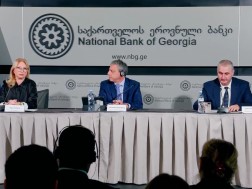





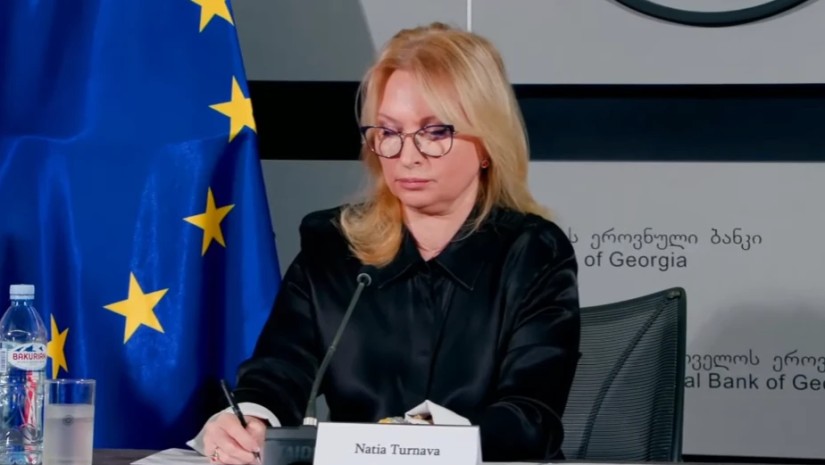

Natia Turnava, the President of the National Bank of Georgia, believes that the "Price Commissions" set up by the government to regulate food prices and the National Bank complement each other effectively. She made these comments in response to a journalist’s question on TV Pirveli, addressing the impact of external shocks, particularly the ongoing conflict in the Middle East, on Georgia's economy.
Turnava stated that inflation expectations are relatively well-managed, but the Middle Eastern conflict and fluctuations in oil prices have already started to have some effect. "According to March data, we are already seeing a moderate impact: the contribution of changes in fuel prices to March’s inflation was 0.2%," Turnava said. She also emphasized that the National Bank is prepared to respond appropriately to these challenges using available instruments.
Regarding the Price Commission, Turnava explained that the roles of the Commission and the National Bank are different, but they complement each other. The National Bank controls monetary policy primarily through interest rates and aims to manage price dynamics and inflation in this way. "The government’s initiative, which involves establishing commissions and setting rules for pricing transparency, aims to promote competition and detect possible cartel agreements," she noted.
She added that this is a structural issue, which falls solely under the government’s competence, and there is no conflict between the two bodies. On the contrary, both institutions work together, enhancing each other’s efforts to achieve better outcomes. "The Price Commission and the National Bank work jointly to achieve better results," said the President of the National Bank of Georgia.