





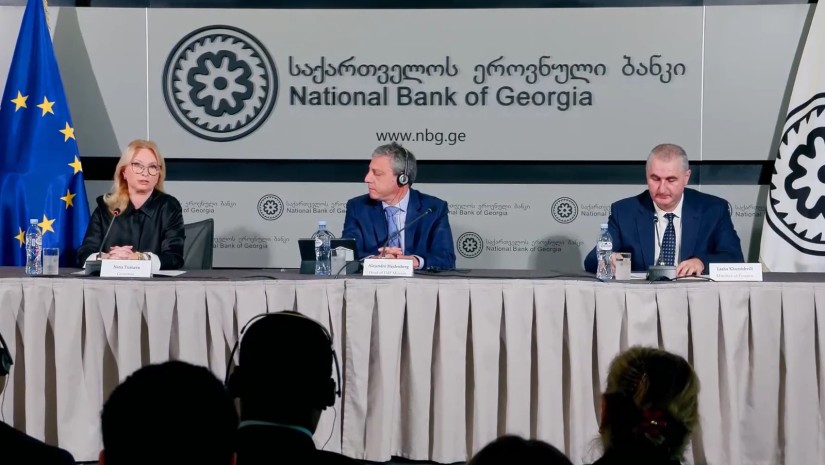

Georgia's National Bank is prepared to tighten its monetary policy if necessary, according to the country's central bank governor Natia Turnava. Speaking at a press conference alongside the head of the IMF mission, Turnava stated that the regulator is currently in a "waiting mode" and will adjust its policy based on the evolving economic situation.
Turnava emphasized that the National Bank has been successful in managing inflation expectations, particularly over the past couple of years. "In 2023-2024, inflation was relatively low, averaging at 1.1%. Our target inflation rate is 3%. While we anticipated that inflation would exceed the target in 2025, due to a lower base in previous years and some one-off factors, we expected inflation to start decreasing gradually by the fall of 2025, returning to target levels," she said.
However, Turnava highlighted the new geopolitical risks, particularly those arising from the Middle East conflict and its impact on oil prices. The uncertainty surrounding the duration of the conflict and potential disruptions in oil supply could have a significant impact on inflation. Nevertheless, she pointed out that inflation has remained relatively low, with a rate of 4.3% in March, and core inflation (excluding volatile items) standing at 2.4%, which is still below the target.
The central bank has prepared internal assessments to guide its decisions based on potential fluctuations in oil prices, and Turnava confirmed that the National Bank is ready for any scenario. "Our primary tool to combat inflationary shocks is the interest rate. Despite a relatively low inflation environment, we have already implemented a relatively tight policy stance with the current rate set at 8%, which is 1% above our neutral rate," she explained.
Turnava concluded that, despite the challenges presented by regional geopolitical uncertainties and other risks, including the ongoing Russia-Ukraine war and tensions in the Middle East, the National Bank is ready to act quickly if necessary, following its track record of swift responses during previous shocks.