

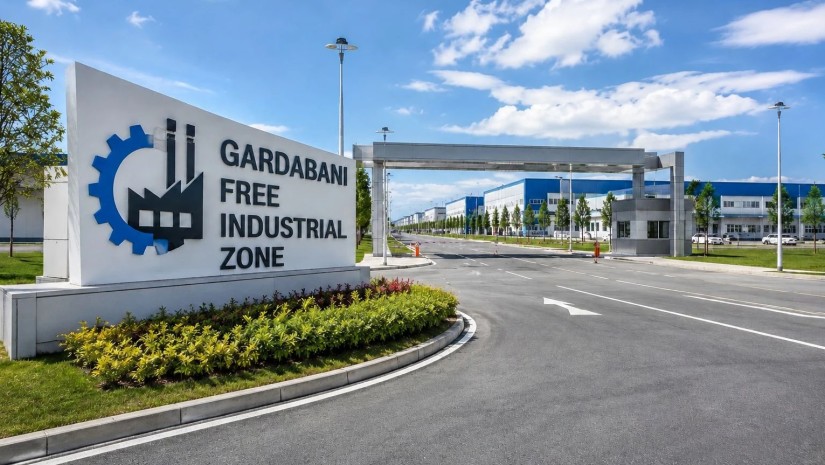

A new Free Industrial Zone (FIZ) is planned for development in Georgia’s Gardabani Municipality on a 150-hectare site. According to the project's initiator, the zone will operate under a new concept focused primarily on manufacturing, export-oriented production, and attracting international investors. Initial investment in the project is estimated at USD 15–20 million. Zaza (Gela) Mikadze – the Chairman of Global Lifestyle, the company developing the Free Industrial Zone project, shares details of the upcoming FIZ in Gardabani.
Free Industrial Zone projects in Georgia have long been associated with your name. You have now selected Gardabani as the location for a new development. Could you tell us about the current stage of the initiative?
The concept of this Free Industrial Zone dates back to 2008. Although we were unable to fully implement the project at that time due to various circumstances, I am pleased that we are now actively working on creating a new-generation industrial zone in Georgia. The site has already been selected, and preparatory work is underway. The zone will be developed on 150 hectares of land.
Which company is behind the project?
The project is being implemented under the Global Lifestyle platform. All of our business activities—including hotels, restaurants, and other ventures—are united under the same corporate structure.
What will distinguish this Free Industrial Zone from existing industrial zones in Georgia?
Most existing Free Industrial Zones in Georgia are primarily focused on warehousing and logistics activities. Our concept, however, is centered on manufacturing. We intend to allocate approximately 90% of the zone to factories and production facilities, while warehousing infrastructure will occupy no more than 10%.
Our objective is to establish manufacturing enterprises that will produce goods for export and contribute to Georgia’s industrial development.
How realistic is it to expect significant interest from international companies?
Georgia possesses unique advantages. The country benefits from free trade agreements with the European Union, China, and preferential trade arrangements with several other important markets. This gives products manufactured in Georgia substantial competitive advantages internationally.
For Chinese and Indian companies seeking access to European markets, Georgia can serve as an attractive production hub. Likewise, European and American manufacturers can use Georgia as a strategic platform for reaching Asian markets.
What challenges did you encounter when working on a similar Free Industrial Zone project in 2008?
One of the main challenges was the shortage of qualified personnel. We held discussions with several major international companies, but workforce readiness and skills development were critical concerns for potential investors.
How do you plan to address this issue within the new project?
We plan to establish dedicated training infrastructure within the zone itself. Future employees will receive foundational professional training, including technical skills and foreign language instruction.
Naturally, different industries have different requirements, and there is no universal training program. However, workers will acquire the essential knowledge and certification needed to enter the workforce and integrate more easily into manufacturing operations.
Have you already begun discussions with potential investors or industrial companies?
Yes, we are currently in communication with several companies. While I am not in a position to disclose specific names at this stage, I can say that one of the world's leading glass and mobile-phone manufacturing companies has expressed interest in establishing production operations in Georgia.
What stage has the process of obtaining Free Industrial Zone status reached?
The application process for obtaining official Free Industrial Zone status has already begun. It is a complex procedure and will likely take approximately one year to complete. At the same time, preparations for the site itself are moving forward.
When do you expect the zone to become operational?
Our plan is for the zone to become fully operational within a maximum of twelve months after official status is granted. At that point, licenses can be issued and companies can begin operating within the zone.
Has the regulatory environment improved compared to 2008?
Yes, there have been several positive legislative changes. Procedures for investors are considerably more streamlined today. Many of the legal and administrative challenges that existed in 2008 have been addressed, allowing Free Industrial Zones to function more effectively.
Who will be responsible for managing the Free Industrial Zone?
The management team will consist of professionals with extensive international experience. We will rely on a core group of specialists with whom we have worked for many years and who possess significant expertise in managing similar projects.
What level of investment is planned for the first phase of development?
Initial investment is expected to be in the range of USD 15–20 million.
Ultimately, what is the broader goal of this project?
Our primary objective is to help transform Georgia into a regional center for manufacturing and exports. The country has all the necessary prerequisites: a strategic geographic location, access to international markets through trade agreements, and significant untapped potential. The next step is to use these advantages effectively by creating an industrial ecosystem that generates jobs, attracts investment, and drives economic growth.