

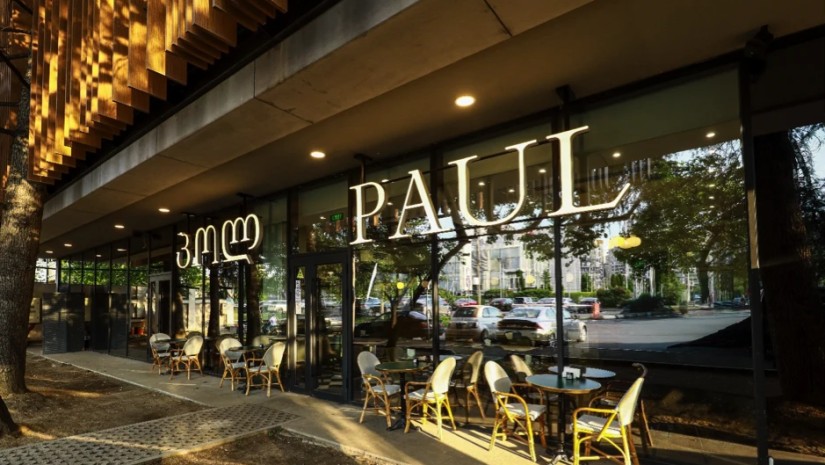

The introduction and development of the French bakery and café chain PAUL Georgia represents one of the most notable success stories in the food and beverage (F&B) sector. It combines franchise experience, international standards, and the shaping of a local market culture.
Origin of the Idea and Discovery of the Brand
Zaza (Gela) Mikadze, Chairman of PAUL Georgia recalls that he first encountered the brand’s concept in Europe in the 1990s:
“PAUL was founded at the end of the 19th century… I first saw this concept in Paris in the 1990s and immediately liked it.”
According to him, frequent visits to the cafés and his personal customer experience eventually led him to consider bringing a similar concept to Georgia.
Experience in the Food Sector and First Steps
As Zaza (Gela) Mikadze notes, PAUL was not his first venture in the food and beverage sector:
“Before this, we had ‘Khachapuri Hut’ and the “Moka & More” chain… this was our third project in the F&B sector.”
In his view, this prior experience significantly facilitated the introduction of an international brand to the Georgian market.
Negotiations and the Franchising Process
The process of introducing the brand to Georgia, according to him, was relatively smooth:
“It was not difficult… a very good, friendly relationship was established with the leadership. Trust was the key factor.”
This mutual trust enabled a swift agreement, although procedural stages still required considerable time.
“It took about two years until the first opening. It was 2016.”
Development Strategy and Expansion
The company has always followed a clearly defined long-term development strategy, which remains actively in place:
“We always work according to a plan. Four more locations will be opened within three years… by 2029 we will be represented with 13 chains,” says Zaza Mikadze.
According to him, future expansion will also include regional development, particularly in western Georgia.
Concept and Market Positioning
PAUL targets a broad customer segment:
“Everyone comes—schoolchildren, students, elderly people… we do not have a restricted target segment.”
He emphasizes that this universality is one of the key reasons behind the brand’s success.
Quality and French Standards
A core value of PAUL (bakery brand) is strict quality control:
“The majority of our products are imported from France… it is the same flour used in Paris, for example.”
He notes that the brand’s policy does not allow any compromise on quality.
“We practically cannot purchase low-quality products—everything must be of the highest standard.”
Competition and Brand Advantage
Despite increasing competition in the market, the brand maintains a strong position:
“Customers know that when they come to ‘Paul’, they will receive the highest quality.”
He also notes that prices remain competitive and, in some cases, even more affordable.
Investment and Business Model
As a high-quality project, PAUL (bakery brand) requires significant investment and high technical standards:
“This is not superficial… all facilities are equipped at the highest level.”
Today, the network includes nine outlets and continues to expand both in Georgia and abroad.
Impact on Food Culture
The interviewee believes the brand has significantly influenced consumer habits:
“PAUL (bakery brand) has created its own niche—the breakfast culture, the croissant culture.”
He adds that breakfast and light morning meals have now become an everyday habit in Georgia.
Conclusion
The story of PAUL (bakery brand) in Georgia demonstrates how the proper management of an international brand can create not only a successful business but also a new cultural trend.
Today, the project stands as a stable, growing, and long-term-oriented business model that combines quality, brand identity, and customer experience.