


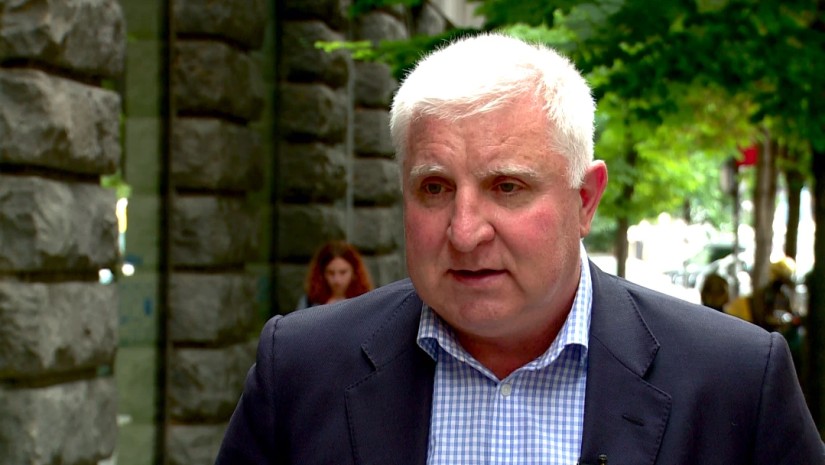

Former Health Minister and public health expert Sandro Urushadze says Georgia’s declining poverty figures are misleading, as much of the reduction is not the result of new jobs created inside the country but rather due to Georgians being forced to work abroad. In a detailed social media post, he explains the difference between absolute and relative poverty and outlines how these indicators have changed over the past decade.
Urushadze notes that absolute poverty - the income level below which people cannot meet basic needs such as food, water, shelter, and healthcare - fell from 21.6% in 2015 to 7.1% today. Relative poverty, which measures inequality and access to basic social standards, decreased only slightly, from 20.2% in 2015 to 17.3% in 2025. He emphasizes that relative poverty shows how unevenly economic growth is distributed among society.
According to him, two financial sources are primarily responsible for the statistical drop in poverty: state social spending and remittances from abroad. Georgia’s annual social protection budget is about 6.9 billion GEL, largely consumed by pensions. Meanwhile, Georgian emigrants send home around 10 billion GEL ($3.5–3.7 billion) each year - nearly 3 billion GEL more than the entire state social budget. These funds directly sustain households by covering food, medicine, debts, and education.
Urushadze argues that migration has effectively become Georgia’s “alternative social budget.” While poverty indicators have improved on paper, he says this improvement is often driven by the forced labor of Georgians abroad, not by economic opportunities at home. His remarks coincide with Georgian Diaspora Day, observed annually on May 27 to honor the contribution of Georgians living abroad.