


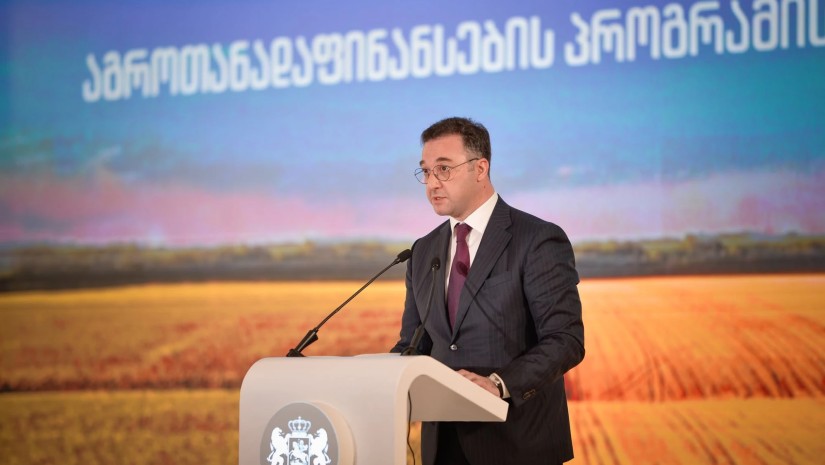

Changes may soon be introduced to Georgia’s state Agro Co-Financing Program, launched on July 1, with discussions underway between the banking sector and the Ministry of Agriculture. One model under consideration would allow the Rural Development Agency’s approved co-financing amount to be placed in a bank deposit after the beneficiary’s business plan is approved and an agreement is signed, providing an additional guarantee for the lender.
Under the new program, unlike the previous model in which the state subsidized bank-approved loans, the Rural Development Agency now makes the initial project decision. Once approved, the business plan and agreement can be presented to a bank, while state funding is transferred only after the investment has been completed and verified. The maximum co-financing amount is GEL 2 million, except for the dairy sector.
Former Deputy Agriculture Minister and agribusinessman Gela Khanishvili has argued that the new model could make access to finance more expensive and complicate agricultural lending. He also criticized the GEL 2 million ceiling, saying it could prevent agribusinesses from consolidating and expanding, which is necessary for standardization, branding and stable access to export markets.
Agribusinessman Beka Gonashvili, founder of AgroKiziki, said placing the state contribution on deposit would provide some relief for banks but would not eliminate all lending risks. He noted that banks still assess borrowers’ credit histories and competencies, meaning an agency-approved project could still be rejected by a bank. BMG has contacted the relevant authorities for details on the discussions and the possible timing of changes.