


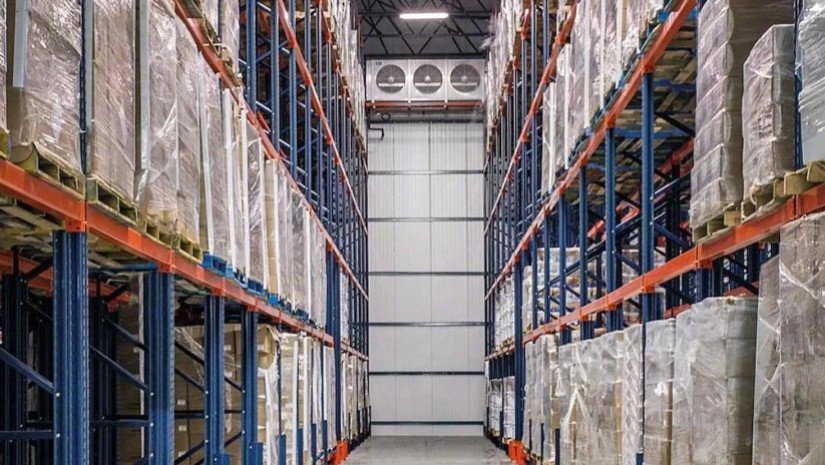

445 cold storage facilities operated in Georgia in 2025. Most of them were located in Shida Kartli region (60.7 percent), while the rest were spread across Tbilisi (10.1 percent), Kakheti (7.9 percent), Kvemo Kartli (4.9 percent), Samegrelo-Zemo Svaneti region (4.5 percent), Imereti region (4.5 percent), Adjara AR (3.1 percent), Samtskhe-Javakheti region (1.8 percent), Guria (1.3 percent), Mtskheta-Mtianeti (0.9 percent), and Racha-Lechkhumi and Kvemo Svaneti (0.2 percent), - according to the National Statistics Office of Georgia (Geostat).
In 2025 service was provided to 533 customers. The number of producers and resellers, from whom the product was purchased for resale, totaled to 1 531, while the annual average number of employed persons in cold storage facilities equaled 2 168.
In 2025, in cold storage facilities were stored 381.7 thousand tons of products. 34.6 percent of those products was chicken meat (including frozen meat), 21.2 percent were meat and meat products (including semi-finished products), 16.2 percent – fish, 15.6 percent – fruits and vegetables, 6.9 percent – milk products, while the remaining 5.5 percent were other types of products.
In 2025 cold storage facilities purchased 105.5 thousand tons of products for resale and the income from provided services amounted to 27.3 million GEL.
In 2025 cold storage facilities sold 901.0 million GEL worth of products (118.8 thousand tons) and relatively big share (46.5 percent) of those products in terms of value were local (purchased) products. Herewith, 39.8 percent of local (own) products sold by cold storage facilities was chicken meat. Significant share of imported products was milk products (29.1 percent), meat and meat products (including semi-processed goods) (26.9 percent), chicken meat (including frozen) (14.8 percent), and fish (11.6 percent).
Sales on the foreign markets accounted for 3.0 percent of total value of products sold by cold storage facilities. Significant share of foreign sales were chicken meat (52.9 percent), and fruits and vegetables (39.7 percent).
According to the results of the survey, the average daily load of storage in cold storage facilities was 55.6 percent in January, 49.2 percent in February, 43.3 percent in March, 46.4 percent in April, 47.4 percent in May, 59.0 percent in June, 55.1 percent in July, 51.8 percent in August, 49.8 percent in September, 59.7 percent in October, 57.4 percent in November, and 50.4 percent in December.
66.3 percent of cold storage facilities are fully equipped with modern equipment, 30.3 percent are equipped partially and 3.4 percent are not equipped with modern equipment at all.
61.3 percent of cold storage facilities use loans. Those facilities use loans to purchase fixed capital (including both, to purchase new equipment or to improve the old ones) (39.6 percent), to finance the working capital (56.4 percent), or to finance both, the fixed and working capital simultaneously (4.0 percent).
In 2025, 36 elevators were active in Georgia. Most of those elevators were located in Kvemo Kartli region (36.1 percent) and in Samegrelo-Zemo Svaneti region (19.1 percent). The active elevators were also located in Kakheti region (13.9 percent), in Shida Kartli region (11.1 percent), in Imereti region (8.3 percent), in Tbilisi (8.3 percent), and in Guria region (2.8 percent).
In 2025 service was provided to 30 customers. The number of producers and resellers, from whom the product was purchased for resale, totaled to 75, while the annual average number of employed persons in elevators equaled 425.
In 2025, 500.8 thousand tons of products were stored in elevators. 62.0 percent of these products was wheat, 22.0 percent was soybeans grits, 7.0 percent was corn and 5.1 percent was wheat flour. The share of the rest of products were negligible.
In 2025, 275.9 thousand tons of products (with total value of 293.4 million GEL) was sold by elevators. 54.3 percent of this amount in terms of value was local (own) production.
Expenses on processing and storage of products by elevators equaled 4.5 million GEL.