


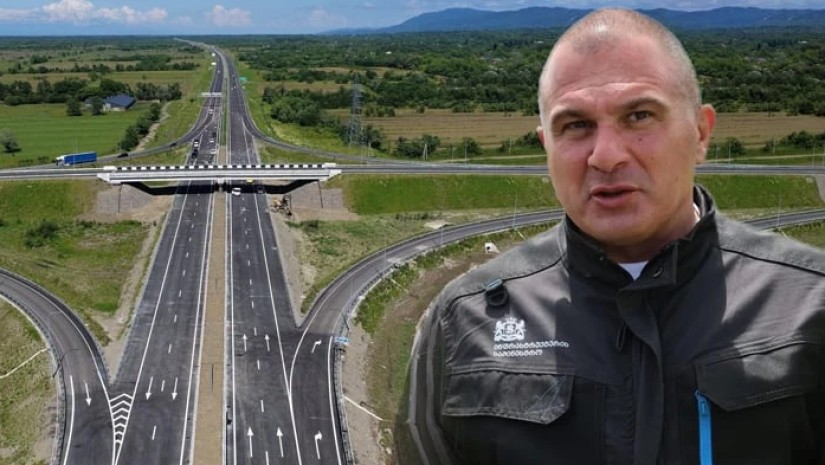

The Ministry of Regional Development and Infrastructure says the newly established state-owned road maintenance company will be allowed to hire private firms as subcontractors and will not compete with or replace the private sector. Responding to criticism from infrastructure businesses, the ministry told BMG that the company's creation is aimed at improving the management of increasingly complex road infrastructure rather than pushing private contractors out of the market. The company is expected to begin operating within three months and will initially maintain a 105-kilometer section of the E-60 Gori-Argveta highway, representing only about 1.5% of Georgia's 7,087-kilometer state road network.
According to the ministry, the decision reflects the evolution of Georgia's road infrastructure, which now includes modern motorways, bridges, tunnels, transport interchanges, and intelligent traffic systems that require constant monitoring, specialized equipment, and rapid response capabilities. This year, the government will spend GEL 63 million on purchasing 119 units of specialized equipment for the company, while its annual operating cost is estimated at around GEL 30 million. The ministry stressed that maintaining the Gori-Argveta section, which includes 138 bridges and 59 tunnels, requires a coordinated operational model.
The ministry acknowledged that there have been quality shortcomings in some road maintenance works carried out by private contractors but said the initiative was not driven by dissatisfaction with any particular company. Officials noted that 27 contractors currently maintain state roads and that no formal ranking or evaluation of their performance has been conducted. They argued that the new company is intended to address the operational demands of modern highways rather than replace existing service providers. The ministry also emphasized that the remaining 98.6% of the state road network will continue to be maintained by private companies, while the new state entity will itself be able to subcontract private firms through procurement procedures.
Addressing concerns over the legislative process, the ministry said a Regulatory Impact Assessment (RIA) was not legally required because the amendments do not introduce new regulations, taxes, licensing requirements, or restrictions for businesses. It also stated that there was no objective need to establish a working group with private sector representatives, as the law merely creates the legal basis for a new institutional model without defining future business arrangements. Looking ahead, the ministry said Georgia's road maintenance system will continue to evolve, with greater emphasis on performance-based contracts, improved monitoring, and higher service quality in line with international practices.