

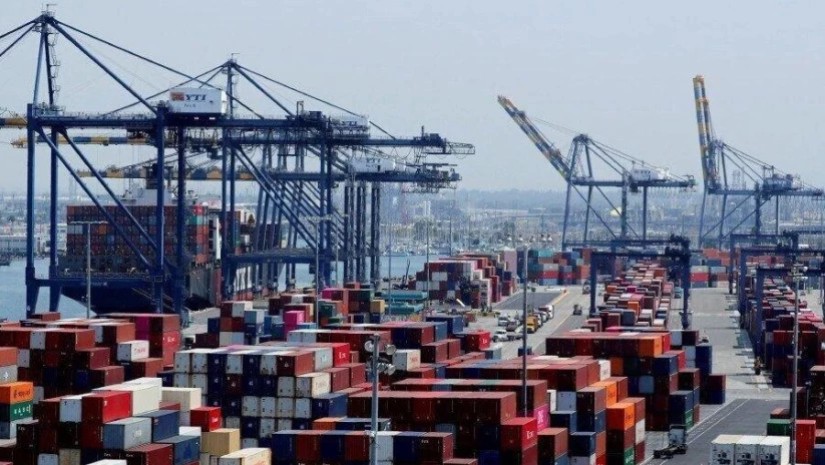

The development of Anaklia Deep Sea Port is strategically necessary amid growing congestion at Georgia’s existing ports, according to a new World Bank report on the Trans-Caspian Transport Corridor. The report says larger vessels in the Black Sea and rising container traffic along the Middle Corridor are placing new pressure on Georgia’s maritime infrastructure.
The World Bank notes that Anaklia, expected to become operational in 2029, will have significant expansion potential and be capable of handling the largest vessels operating in the Black Sea. The port’s landlord model, under which the state retains ownership of land and infrastructure while private companies operate terminals, is described in the report as consistent with global best practices and capable of encouraging private investment and competition.
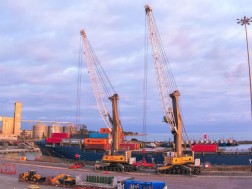
The report highlights capacity constraints at Poti and underutilization at Batumi. Poti handled 636,466 TEU in 2025 against annual capacity of 650,000 TEU, representing about 98% utilization and 85% of Georgia’s container traffic. Batumi, meanwhile, has capacity of 200,000 TEU but handled 109,579 TEU in 2025, or about 55% of capacity.
Until Anaklia becomes operational, the World Bank recommends short-term measures at Poti, including management optimization, equipment investment and improvements to last-mile infrastructure. The report also suggests that the landlord model planned for Anaklia could serve as an example for applying similar approaches to other port projects in Georgia.