

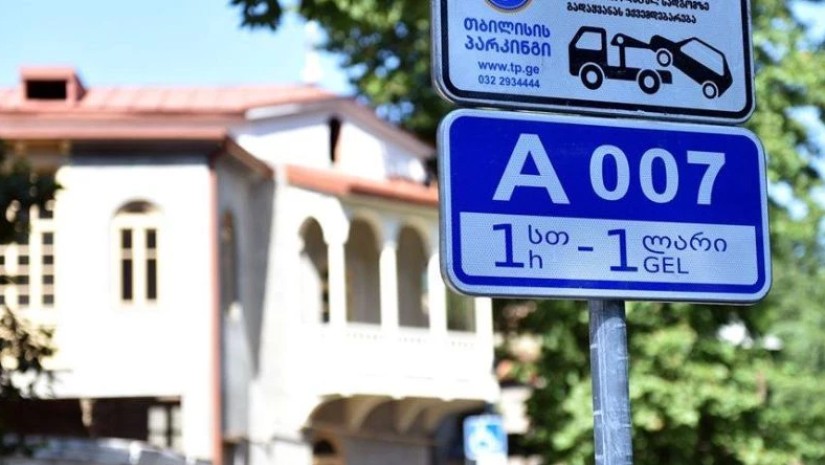

Tbilisi City Hall will expand the zonal-hourly parking system to several new districts starting August 1, according to an announcement made by Tbilisi Mayor Kakha Kaladze during a recent government session.
The new zones will cover areas in Mtatsminda, Vazisubani, Didi Dighomi, Bagebi, and along Beri Gabriel Salosi Avenue. The initiative is part of the city’s ongoing parking reform aimed at improving urban mobility and reducing congestion.
“The reform is already being implemented in specific districts. Zonal-hourly parking allows residents to park near their homes free of charge if their license plates are registered at their residential address,” Kaladze said.
To take advantage of the benefits, residents can register their vehicles at designated information booths starting July 1, where city staff will assist with the process.
Details of the New Parking Zones:
Mtatsminda District — 596 spaces total, including:
- Mitropane Lagidze, Aleksandre Griboedov, Aleksandre Chavchavadze, Arsena, Zubalashvili Brothers, Besiki, Ingorokva, Shio Chitadze, Vukol Beridze, Zurab Zhvania, Taras Shevchenko, Lesia Ukrainka, Mtatsminda, Daniel Chonkadze, Kakabadze Brothers, and Zakaria Chichinadze Streets
Vazisubani — 160 spaces, located on:
Osip Mandelshtam Street and 17 Shindiseli Geri Street
Didi Dighomi — 324 spaces, located on:
- King Parnavaz Avenue, Giorgi Brtskhinvali Street (near the King Parnavaz intersection), and Petre Iberi Street
- Beri Gabriel Salosi Avenue — 160 spaces
- Bagebi — 100 spaces, located on:
- Zurab Sakandelidze Street and Tskneti Highway
- Information Booth Locations:
Residents can register or get assistance at the following booths:
- Opposite Besiki St. N25
- Taras Shevchenko St. N5
- Alexandre Chavchavadze St. N9
- Opposite Tskneti Highway N49
- Beri Gabriel Salosi Ave. N112 and N142
- Osip Mandelshtam St. N3
- Parnavaz Mepe Ave. N1 and N35
- Petre Iberi St. N24
According to Tbilisi City Hall, staff at the booths will help citizens complete the registration process on-site.
The zonal-hourly parking system was first introduced in 2020, and its gradual expansion is part of the city’s broader transport and infrastructure reform efforts.